
OpenAI
AI-powered and AI-created. Based on the strange little world of Codex Pets.

The concept was designed to surprise—and genuinely entertain—its developer audience, drawing on the late-’90s arcade fighters that influenced many of its most senior members.
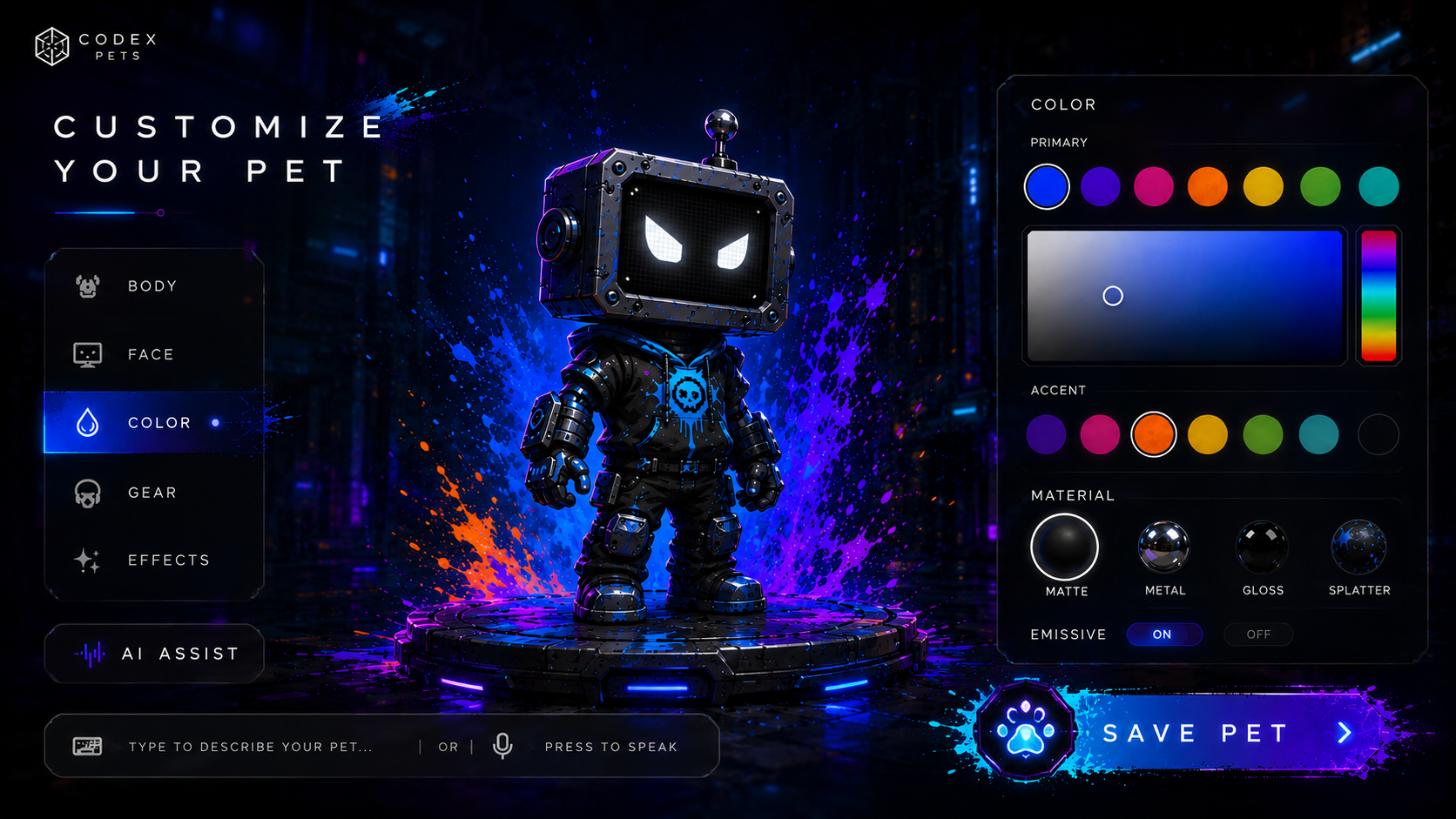
Each user’s Codex Pet became a customizable fighter. Once uploaded into the game world, the pets shifted into an arcade-inspired visual style and became part of a live coding demo—showing how easily Codex could power a feature-packed game.
The characters were rendered with integrated AI, then given predefined motion and abilities. By building around existing pets and hardware, we focused on the experience, animation, and game mechanics. Delivering the entire experience—including the event space—in just 30 days became tangible proof of Codex’s efficiency. The intense 1v1 and multiplayer battles made it memorable.
Role & timeline
- Role
- Experience design and motion lead
- Timeline
- 30 days
- Responsibilities
- Spatial design, game mechanics, character motion, asset ingestion, wireframes, motion prototyping, and 3D layout collaboration
- Key skills
- AI product design, motion design, game UX, rapid prototyping, Rive, and LottieLab
Problem
OpenAI needed a way to distinguish Codex Pets at a high-profile industry event and demonstrate how quickly a complete experience could be built and polished with Codex.
Goal
Create a playable, shareable game demo in 30 days using existing pets and hardware, demonstrate Codex's capabilities, and turn event traffic into contacts.
01
Outcomes
- Days
- 30
- Agents
- 4
- Conversion rate
- 46%
- Contacts gained (THREE SHOWS)
- 5,281
Days
Agents
Conversion rate
Contacts gained (THREE SHOWS)
02
Characters & motion
The pets had to feel like characters, not assets. I started with wireframes of the characters to establish poses and silhouettes, then moved into Rive and LottieLab to cover the major actions: idle, attack, react, win, and lose.
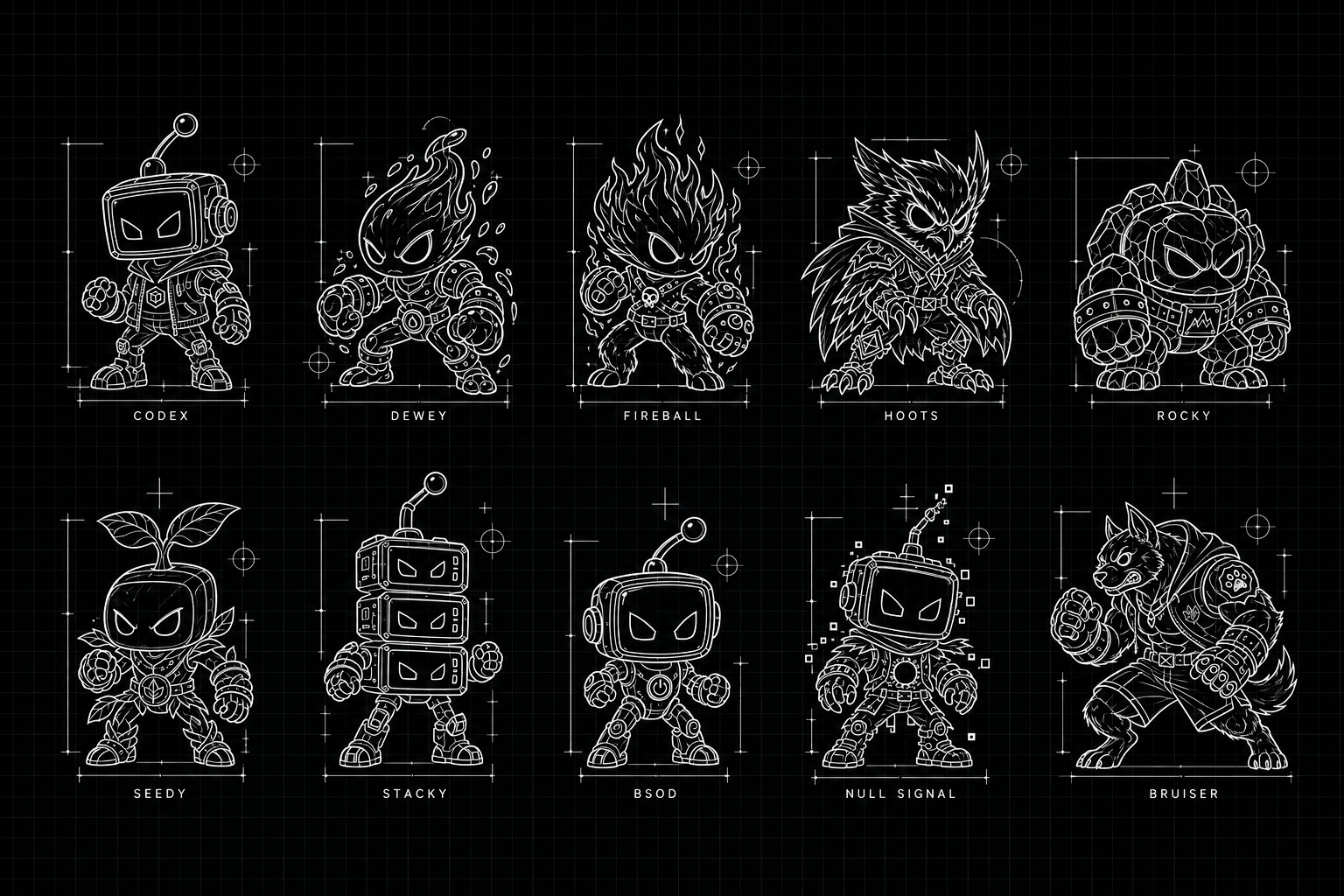
Once the motion vocabulary was clear, we created a character schema defining each pet's actions and behaviors so Codex could interpret the assets consistently. A small set of assets was ingested into Codex first to validate the animation behavior. We then expanded the pipeline and used automated tasks to scale the work across the full roster.
Motion work
- Wireframes of character poses and actions
- Rive and LottieLab motion exploration
- Character schema defining actions and behaviors
- Asset ingestion and animation validation in Codex
- Automated task expansion across the full roster
With the core motion vocabulary in place, we could test complete match loops and see how the characters read under event-floor conditions.
03
Space & mechanics
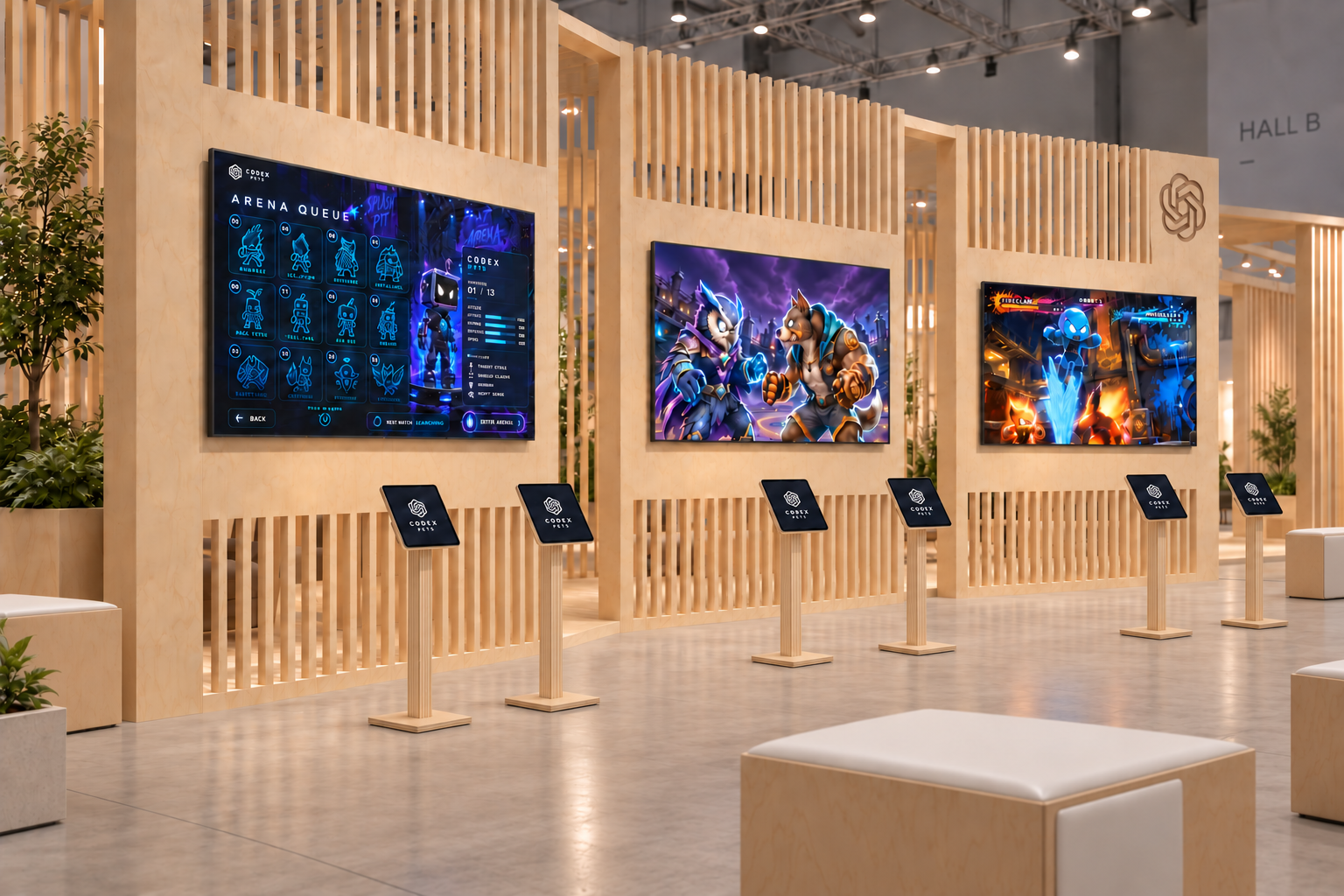
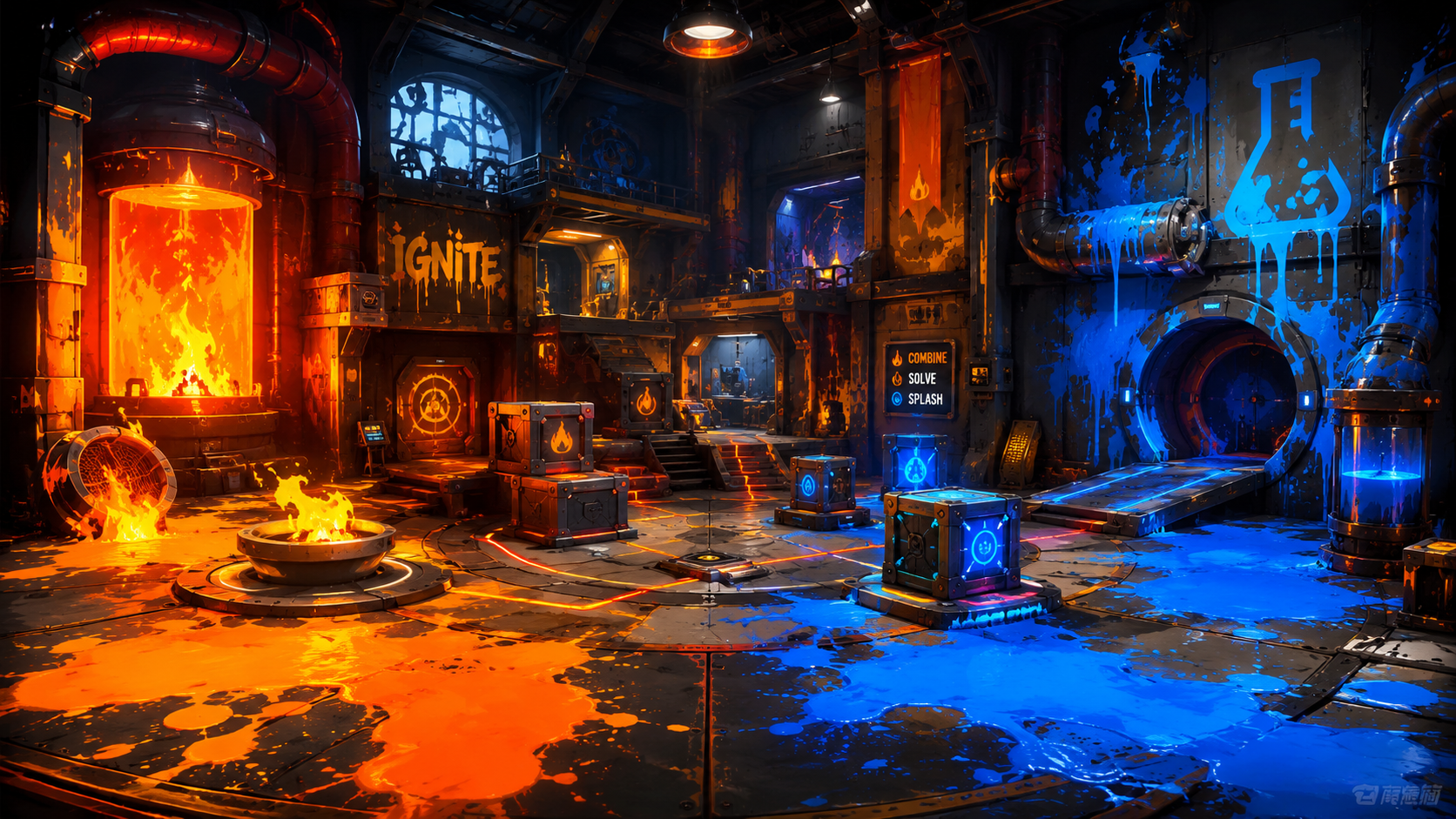
We began by establishing the space. Defining the arena early made every downstream decision easier: what the hardware had to support, how players would move through the experience, and where the spectacle would land. The spatial design helped establish the hardware requirements before construction started.

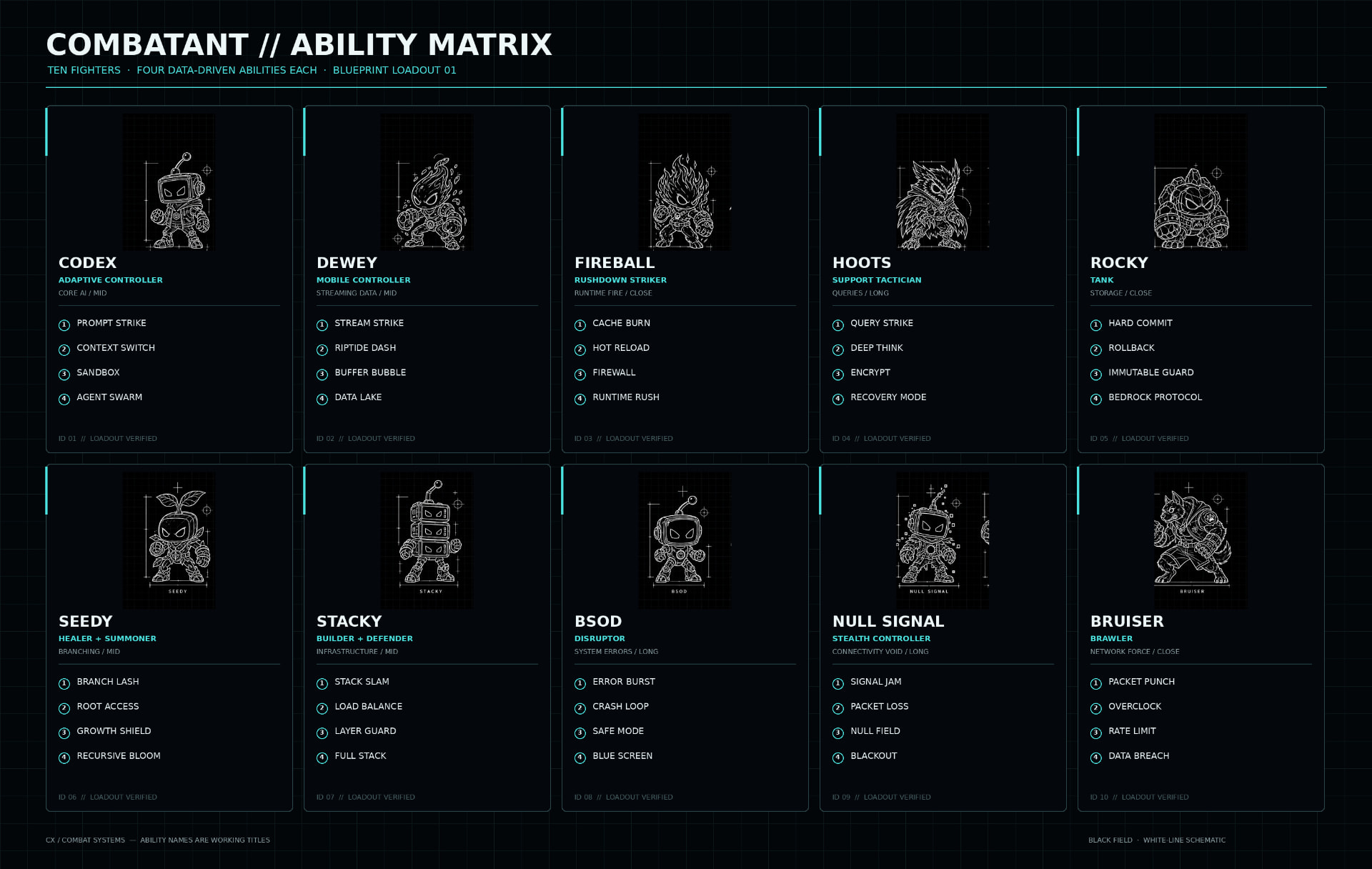
From there, we designed the core mechanics: a queue system, character abilities, and a match flow that let people watch, wait, and play without a long explanation. Asset ingestion, game-space development, and ability design happened in parallel so the build could keep moving.
Core systems
- Arena space and player queue
- Game spaces designed around the hardware footprint
- Character abilities tied to pet traits
- Match flow designed for short, repeatable rounds
- Asset pipeline from design and motion tools into Codex
- Final game integration and polishing in Codex
04
Deliverables
In 30 days, we built a playable, shareable game experience that turned an industry event into a working demonstration of Codex. The experience used existing pets and hardware, moving from spatial design and character motion into asset ingestion, live gameplay, and final polishing in Codex. It captured 5,281 contacts at a 46% conversion rate.
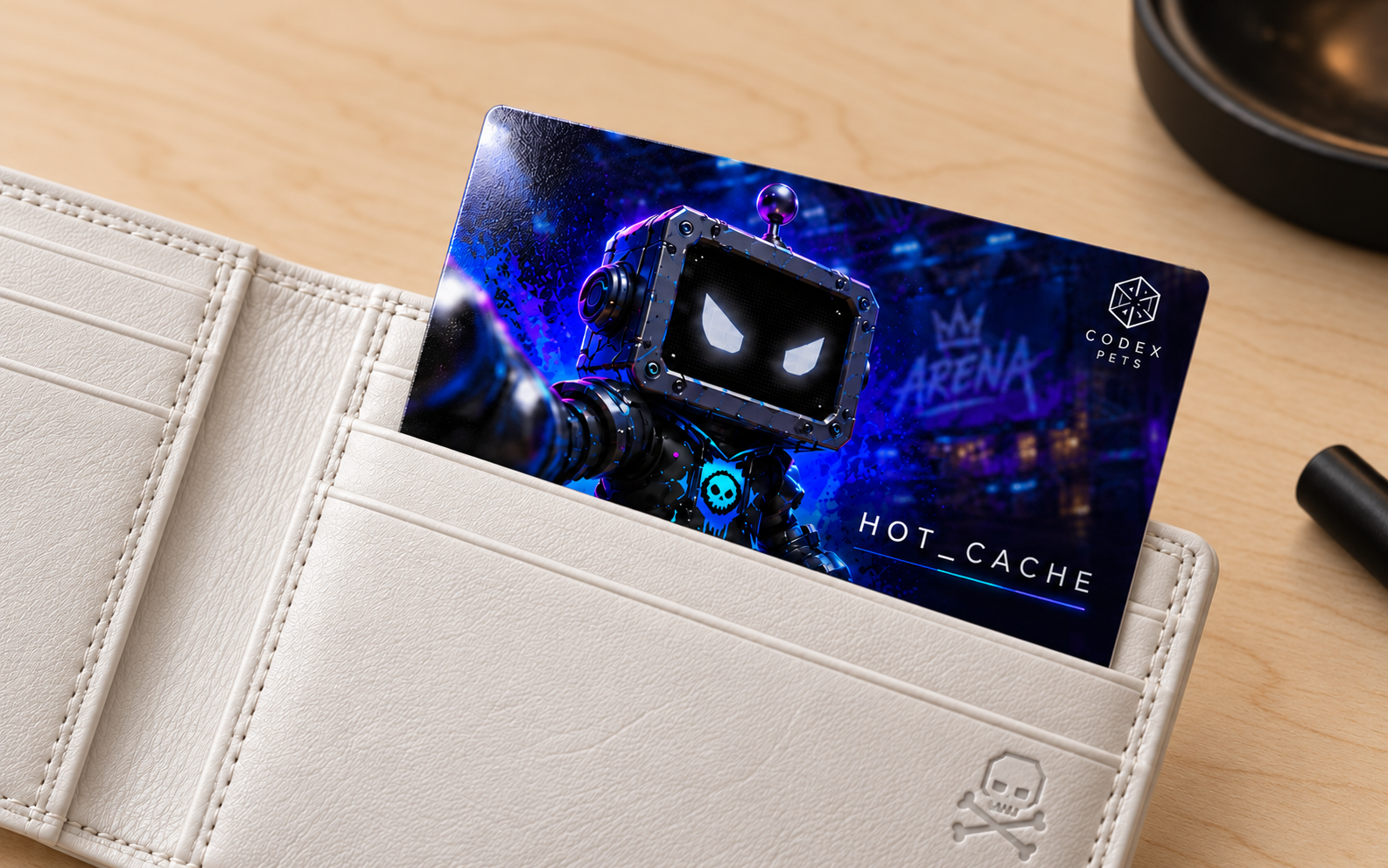
Each participant left with a keepsake featuring their Codex Pet and screen name. That image became the anchor for marketing follow-ups, turning a single event interaction into an ongoing conversation.
What worked
- Starting with the space made hardware and layout decisions faster
- Motion-first character work gave the pets immediate personality
- A defined schema allowed Codex to interpret and scale the character behaviors
- Ingesting the assets into Codex brought the game systems together and enabled final polishing
- Short match loops kept the queue moving and the crowd engaged
- Personalized keepsakes gave marketing a natural follow-up hook
- The demo proved the capabilities of Codex alongside the quality of the experience design