
Intenti.co
An AI product that reads behavioral signals and tells a salesperson what to do about them.
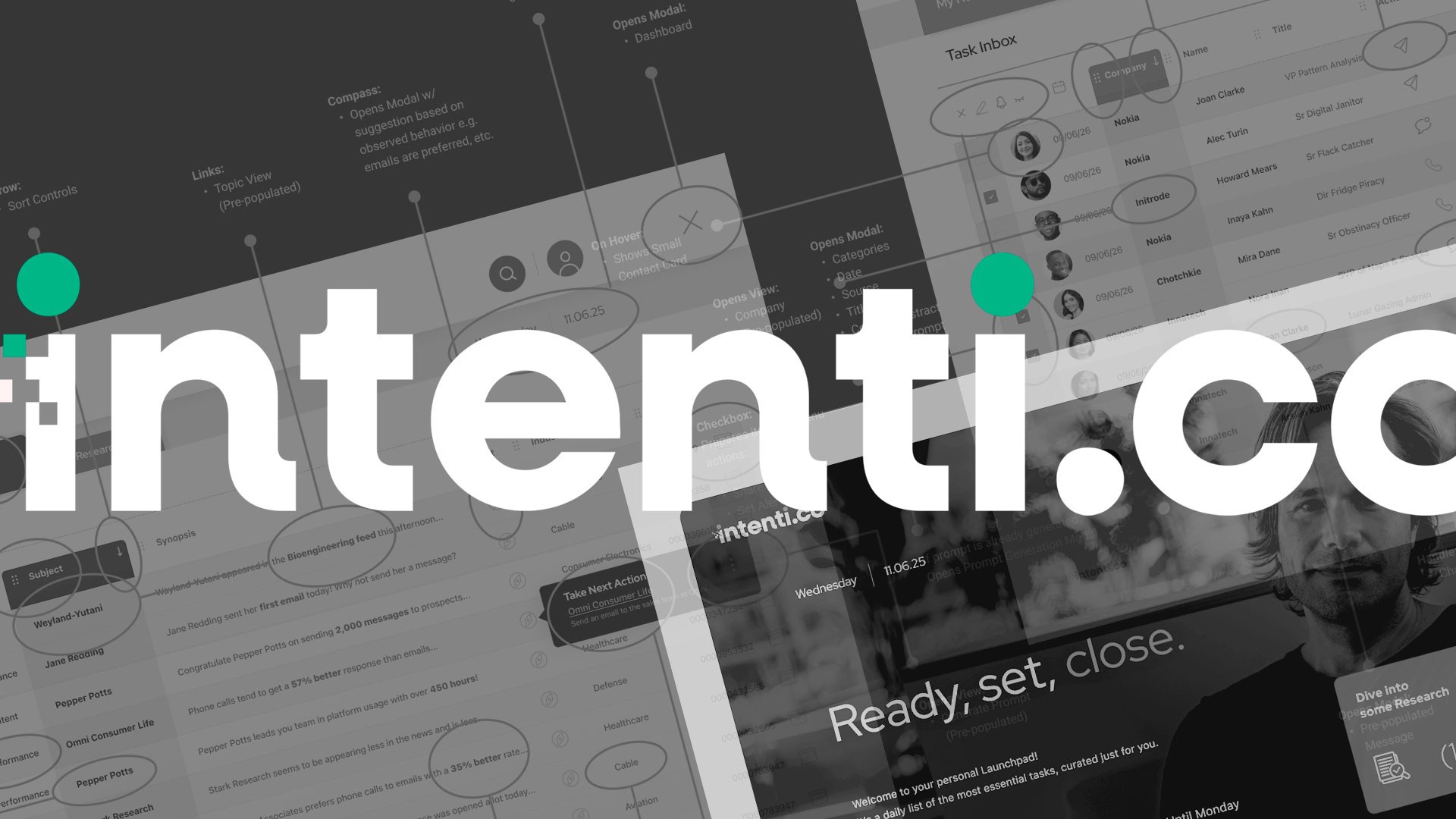
Intenti.co is a sales intelligence product that monitors industry news, tracks client activity, and helps sales teams recognize the right moment to reach out. It mines public signals and turns them into client-specific opportunities.
The core challenge was not showing more information. Sales teams already had too much. The opportunity was helping them see what mattered, why it mattered, and what to do next.
Role & timeline
- Role
- UX strategy and product design lead
- Timeline
- Feb 2026 – Aug 2026
- Responsibilities
- UX strategy, research synthesis, IA, taxonomy, wireframes, prototype testing, product storytelling, UI components
- Key skills
- AI product design, CRM, analytics, interaction design, product framing
Problem
Sales teams miss timely opportunities because relevant industry news is scattered across too many sources, and even when they find it, they still have to interpret it.
Goal
Turn scattered industry signals into account-specific opportunities that tell a salesperson what happened, why it matters, and what to do next.
01
Overview
A client may announce expansion plans, leadership changes, regulatory issues, funding activity, or new strategic priorities, but those signals are easy to miss unless someone is actively watching. Even when salespeople find relevant news, they still have to judge whether the event matters, which account it affects, and whether outreach makes sense.
AI supported the product vision, and it also played a real role in the design process: speeding up early wireframing, summarizing competitive patterns, exploring use cases, and checking whether the product could generate useful signals from real industry activity.
Goals
- Identify industry and client signals faster
- Connect events to accounts and opportunities
- Explain the business relevance of each signal
- Prioritize outreach by confidence and potential value
- Give sales a new metric for tracking performance
- Drive internal adoption with a famously tough audience
02
Research
We recorded the functional and business backlogs at the very start, which gave us a list of standard and edge cases that AI had not generated. That list proved essential for validation, since AI was far less useful for edge cases.
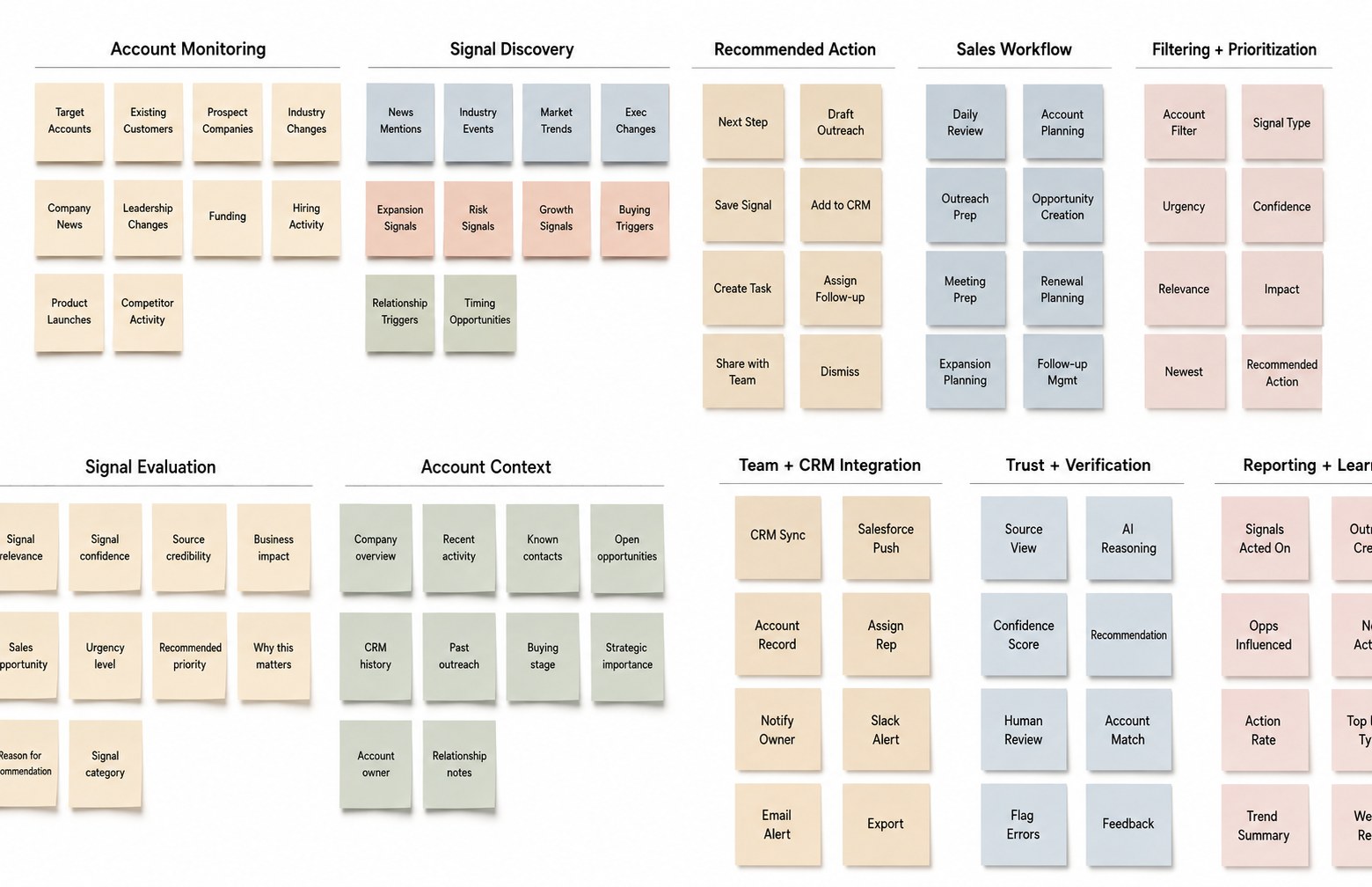
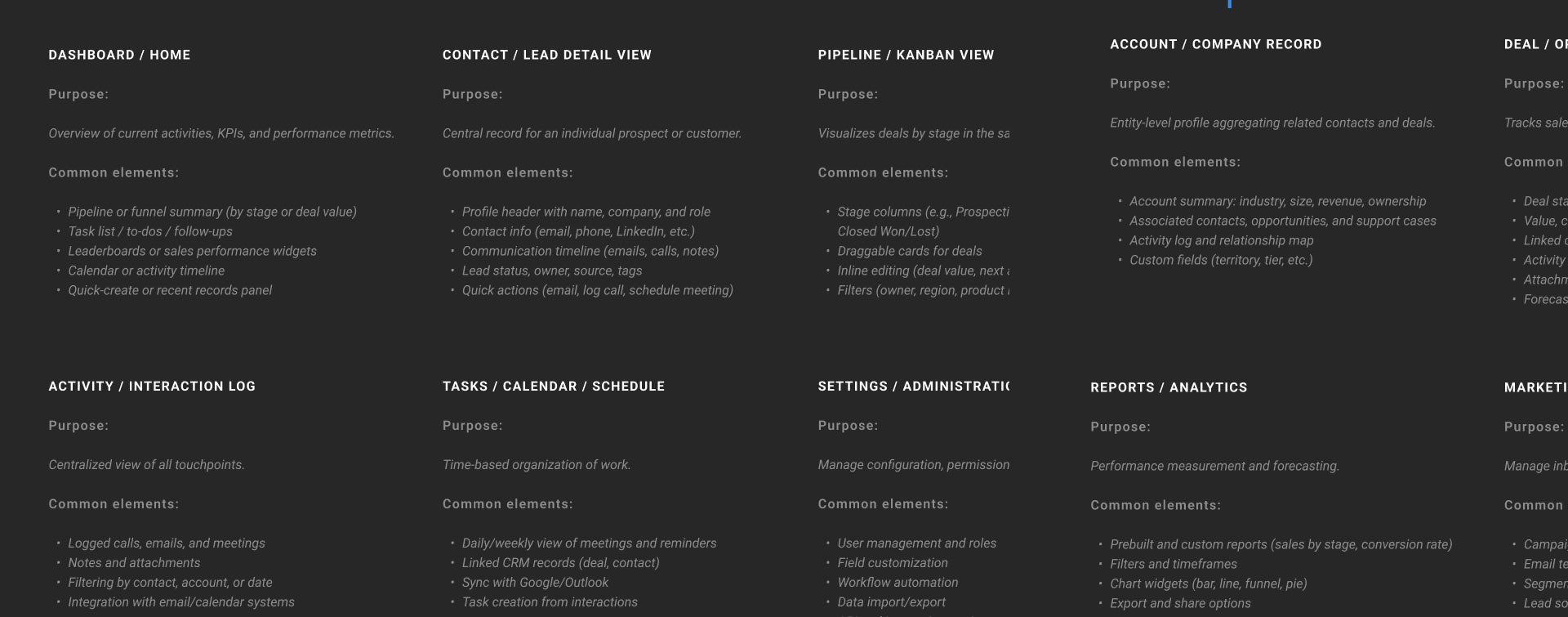
To understand the landscape, I used AI to build a feature-overlap model across major CRM and sales intelligence products, then grouped features by depth, maturity, and usage pattern. From there we identified a typical industry journey: the baseline experience users would expect before Intenti.co could stand apart.
- Messages per day
- 100+
- Dead ends
- 78+
- Accounts per rep
- 3.6
- Legacy users
- 1.5k
Messages per day
Dead ends
Accounts per rep
Legacy users
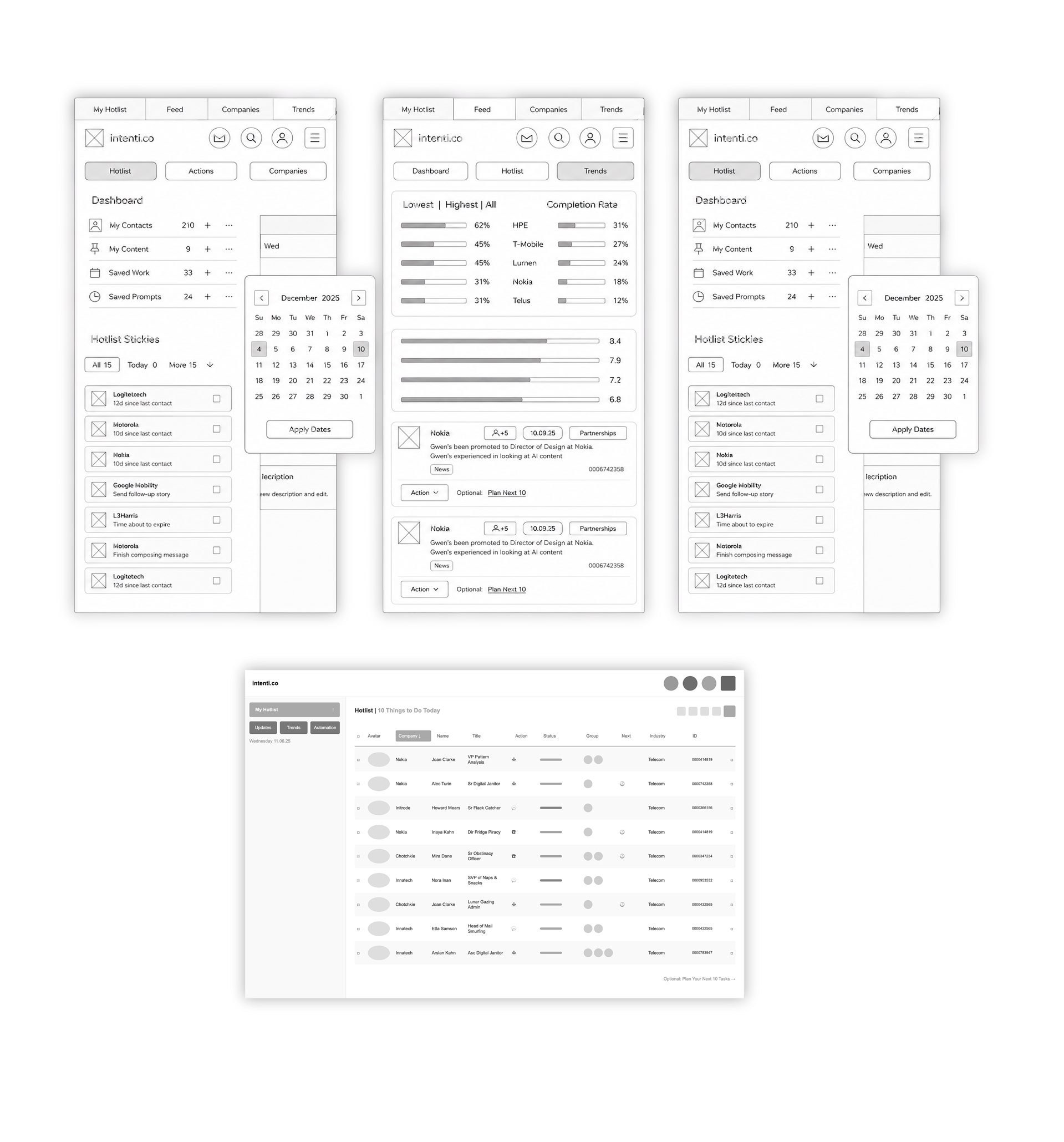
Questions we kept returning to
- If an exception is triggered, how did the user arrive there?
- How do we make switching between accounts effortless?
- How does handoff happen for a prospect?
- How do we nurture leads without alienating the user?
- Can admins monitor performance non-intrusively?
AI meant working faster, but it still needed oversight and direction. It was good at attaching probabilities to events, but judgment still had to come from people. The research also narrowed the opportunity: not another CRM, feed, or intent-data layer, but a focused tool that connects industry signals to specific accounts and a next step.
03
UX strategy
The first step was defining the difference between generic news aggregation and sales intelligence people could act on. Salespeople did not need another feed. They needed a filtered view of client-relevant activity, one that moved past headlines and explained the link between an outside event and a potential business need.
Competitive patterns made the gap clear: news-heavy dashboards showed too much raw information, intent platforms scored events without explaining them, and CRM tools tracked accounts without explaining timing. The design opportunity was to combine signal detection with plain-language reasoning.
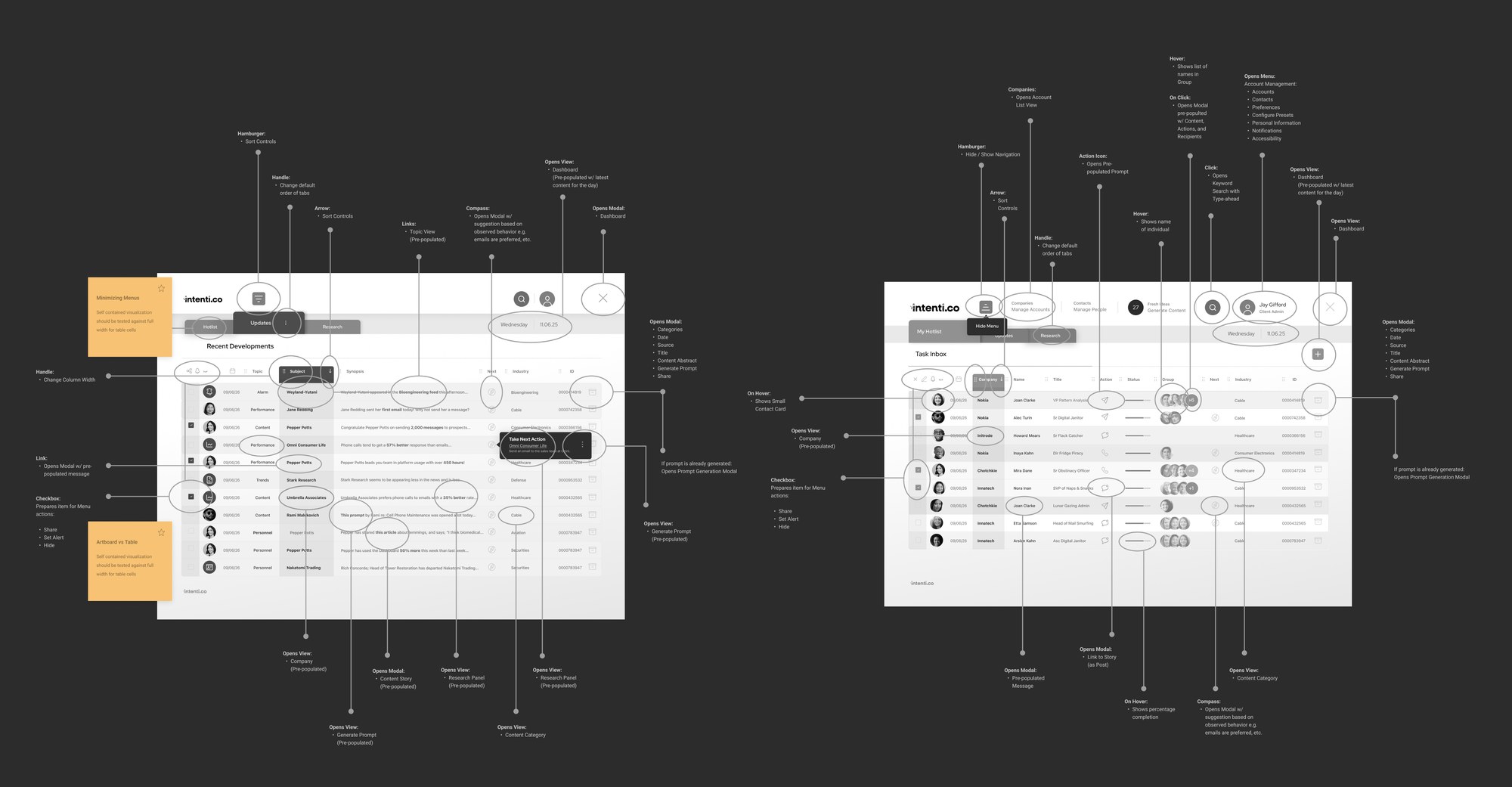

Critical stages
- Signal discovery: a fast view of what changed across the client list
- Signal interpretation: implication, confidence, and account relationship
- Prioritization: ranking by relevance and potential value
- Action: outreach, assignment, and tracking inside the workflow
04
Design direction
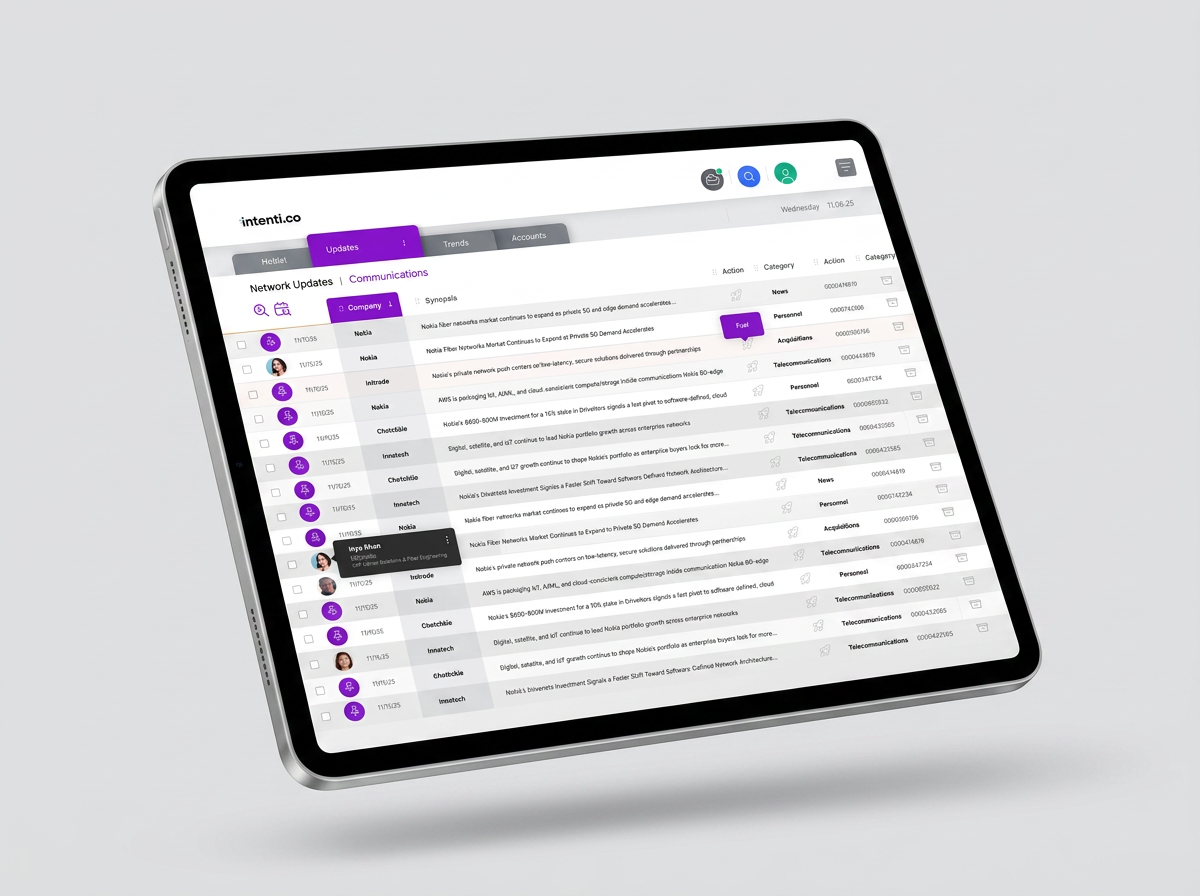
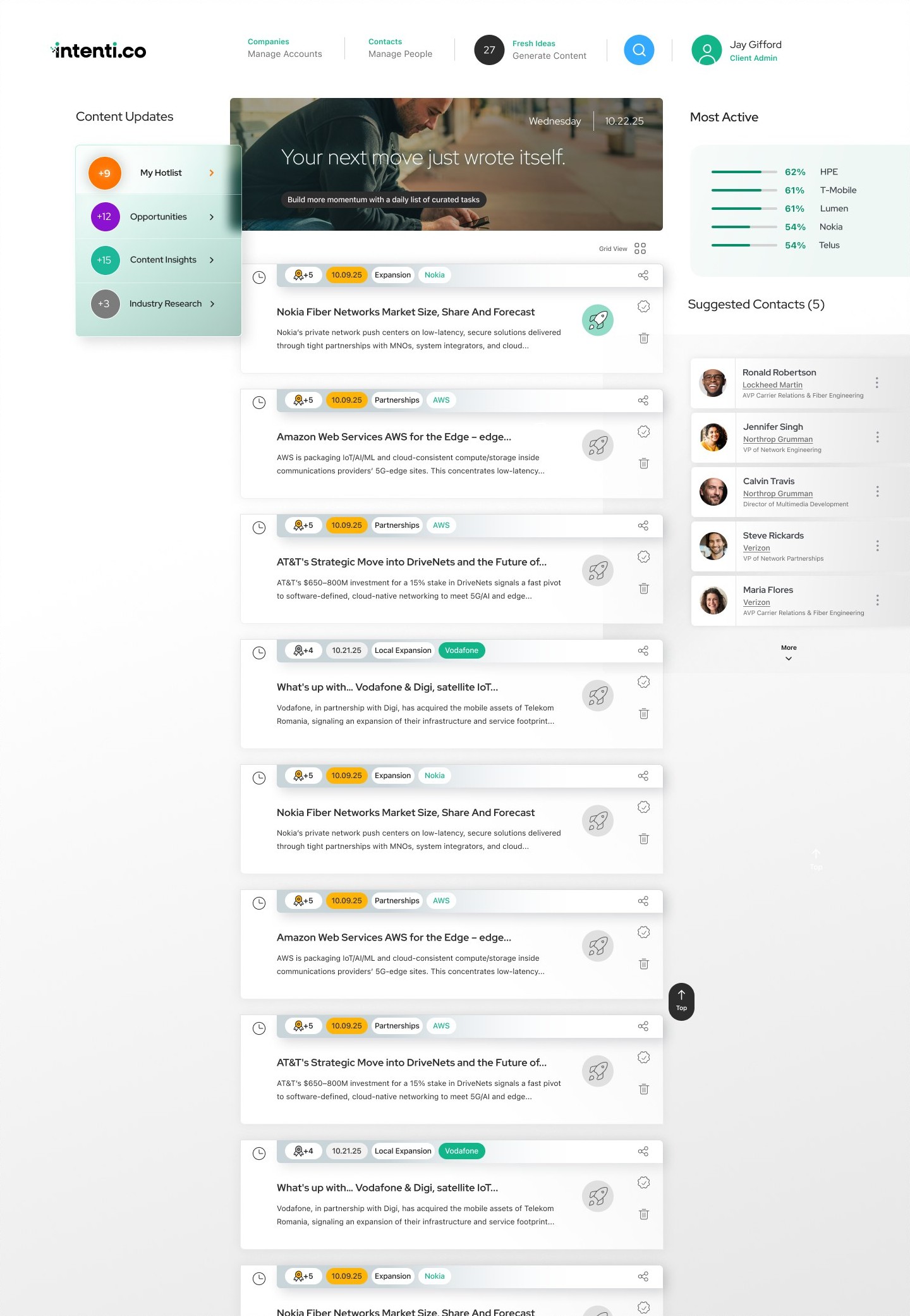
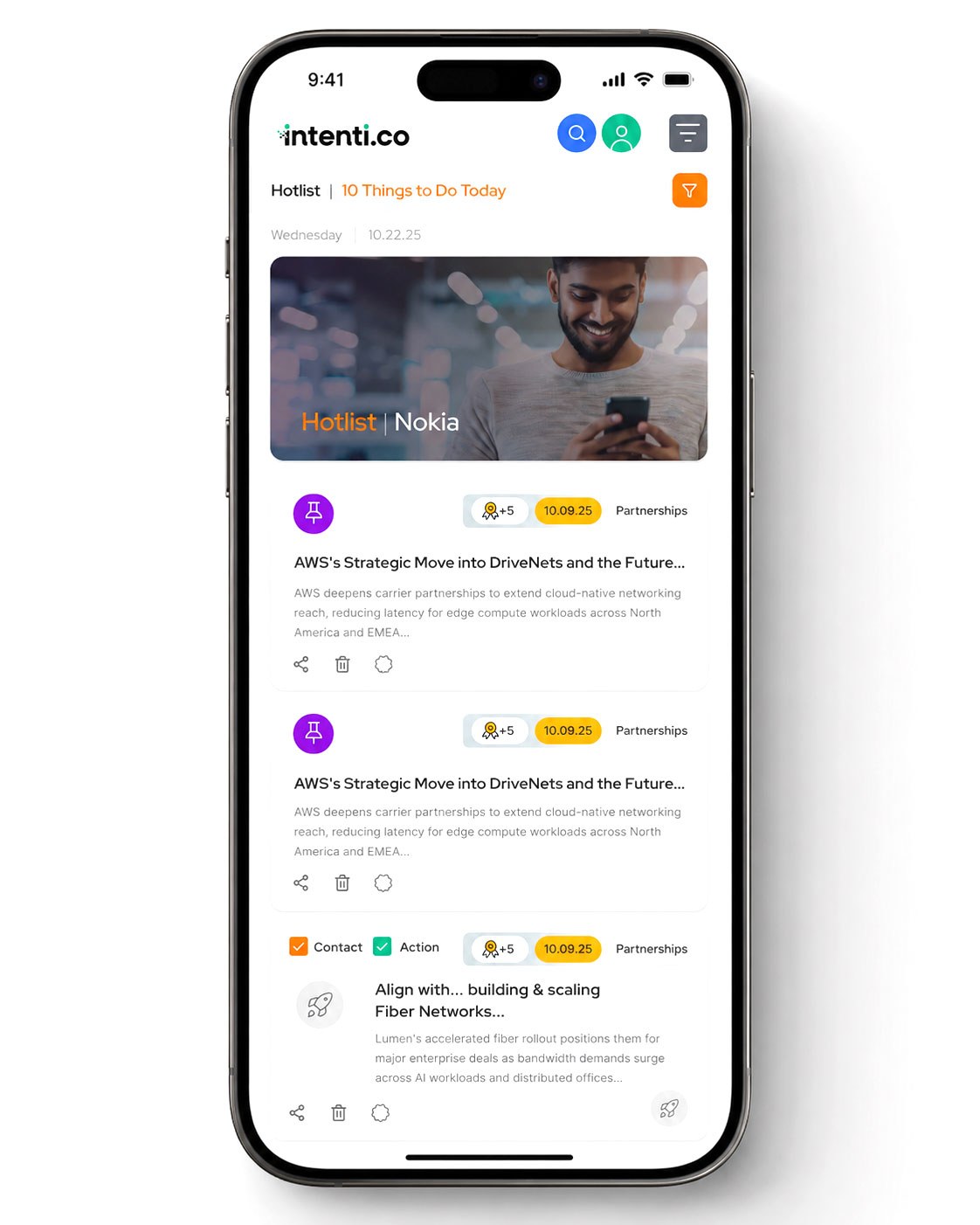
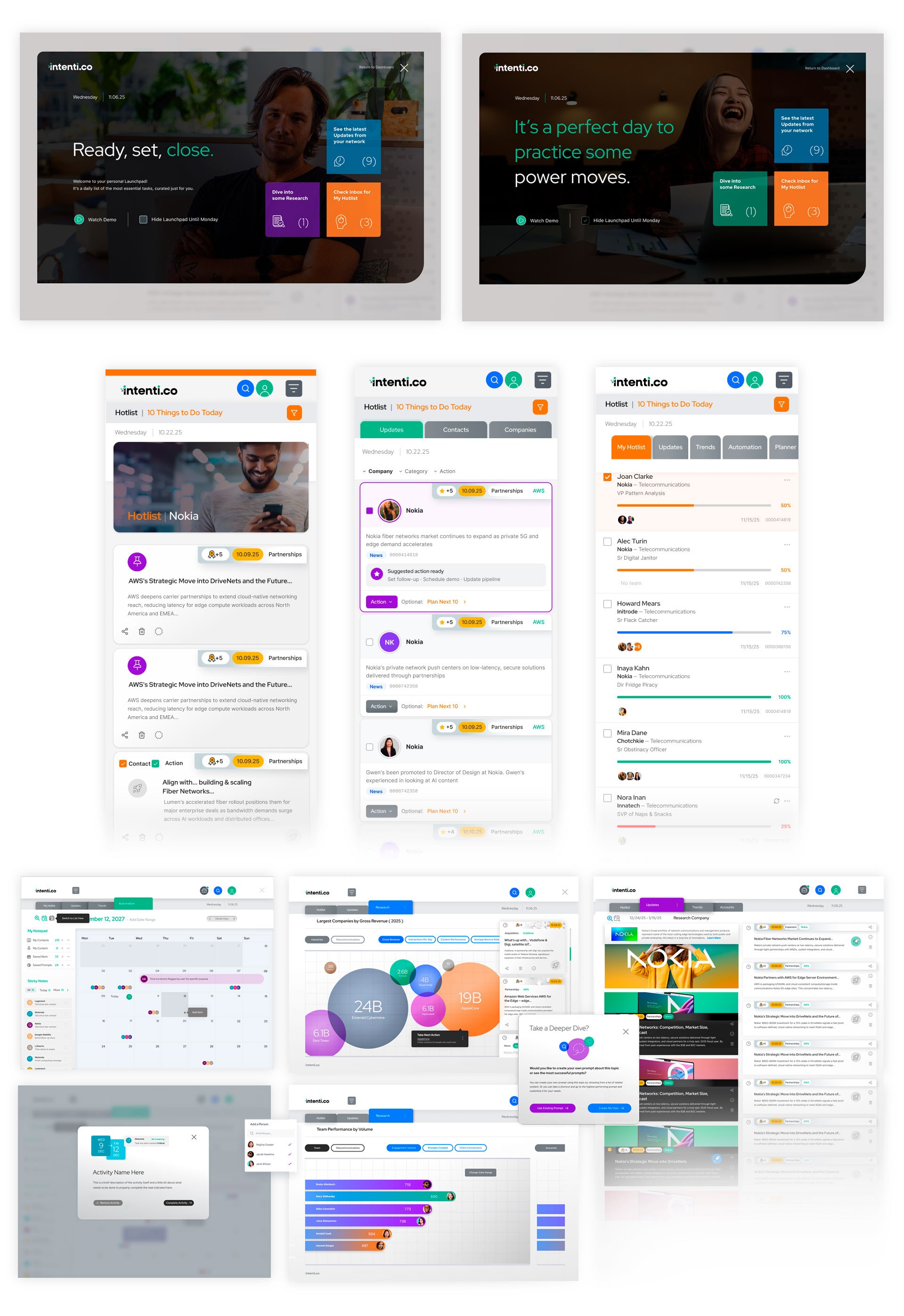
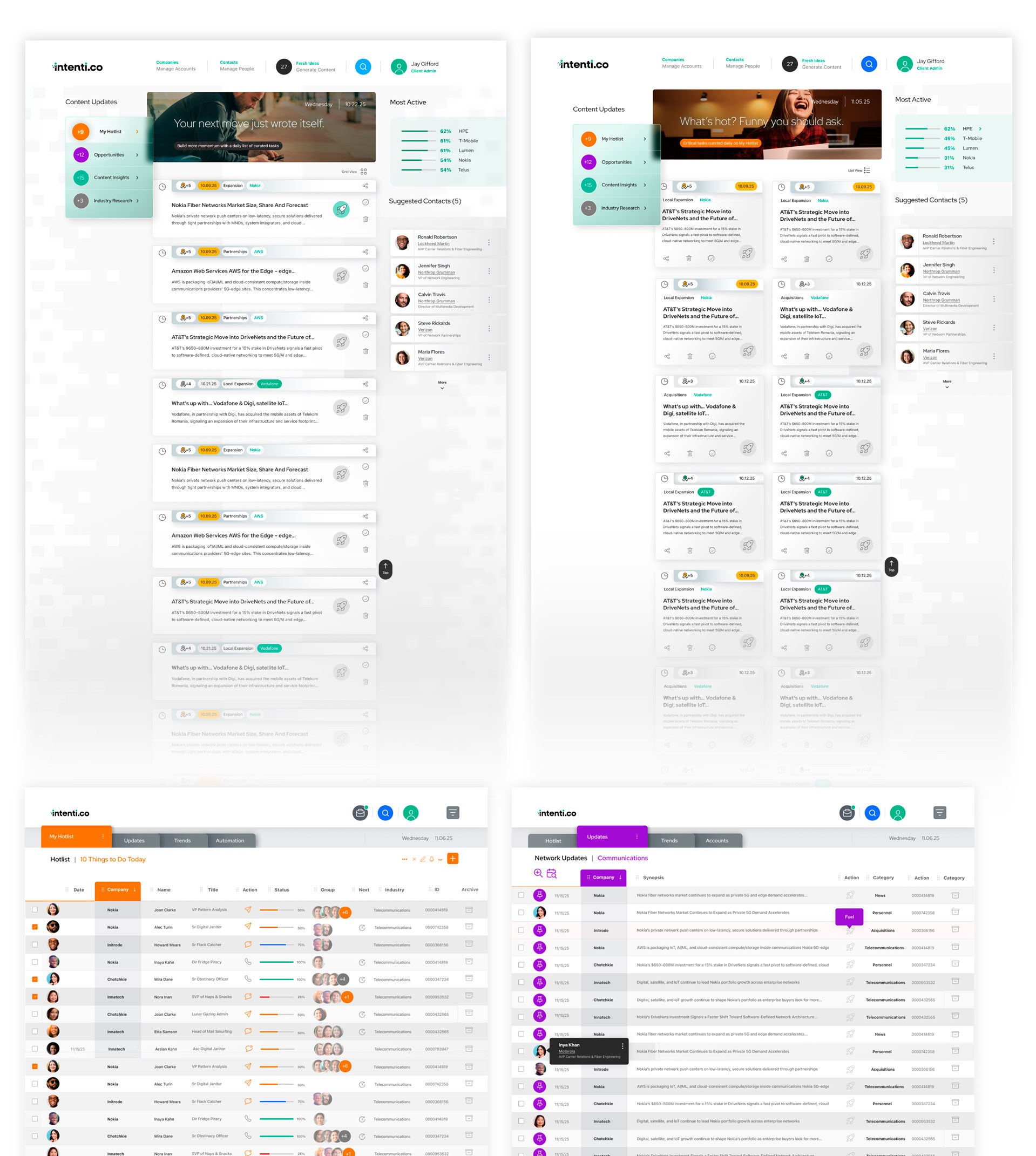
The interface centered on a signal dashboard, backed by account-level detail pages and prioritized action cards. Each card carried a plain-language summary of the event, the affected account, the signal category, why it might matter, a suggested next action, confidence indicators, source links, and options to save, dismiss, assign, or act.
It had to be useful without feeling like a black box. Salespeople needed enough explanation to trust a recommendation, but not so much that reading it took longer than acting on it.
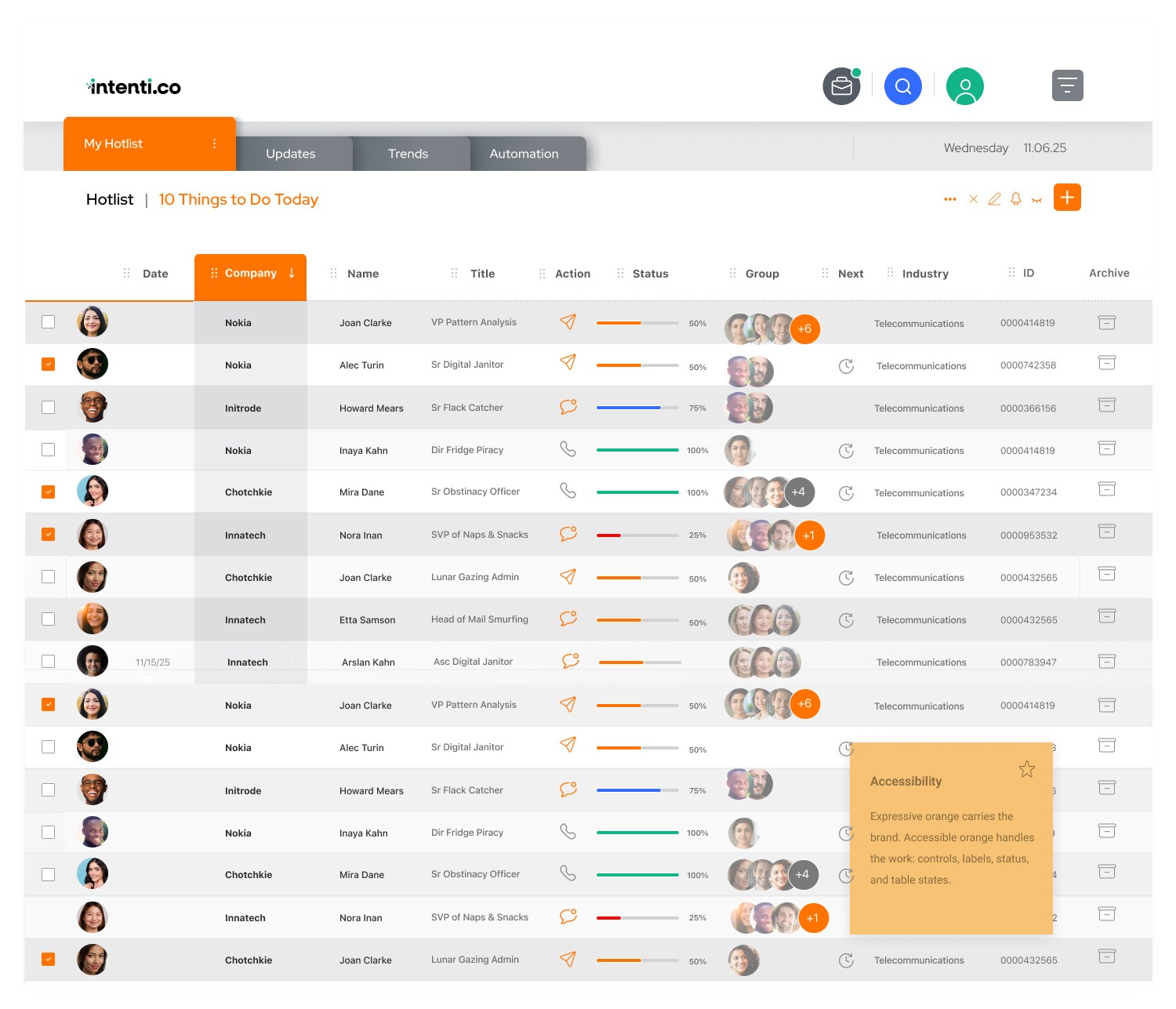
Key UX decisions
- Explainability over automation: the product shows its reasoning
- Prioritized signals over raw feeds: ranking, filtering, relevance
- Action-oriented summaries that connect events to business need
- Confidence and source visibility so users can verify before acting
05
Outcome
The work defined a product experience that turned scattered industry news into a focused sales workflow. Instead of asking users to search, scan, and interpret on their own, Intenti.co hands them the event, the account it affects, and a suggested next step.
Findings
- AI supported both the product experience and the design process
- AI was strongest at competitive research, probability, and wireframe exploration
- Human oversight remained essential for edge cases and judgment
- UX built around timing, relevance, and trust produced the differentiation
- A new category gives the business a lasting edge
The product didn't need to say more. It needed to explain why an event mattered and what to do about it.