
Crowdbotics
An incremental relaunch for a platform whose site was undercutting its own credibility.
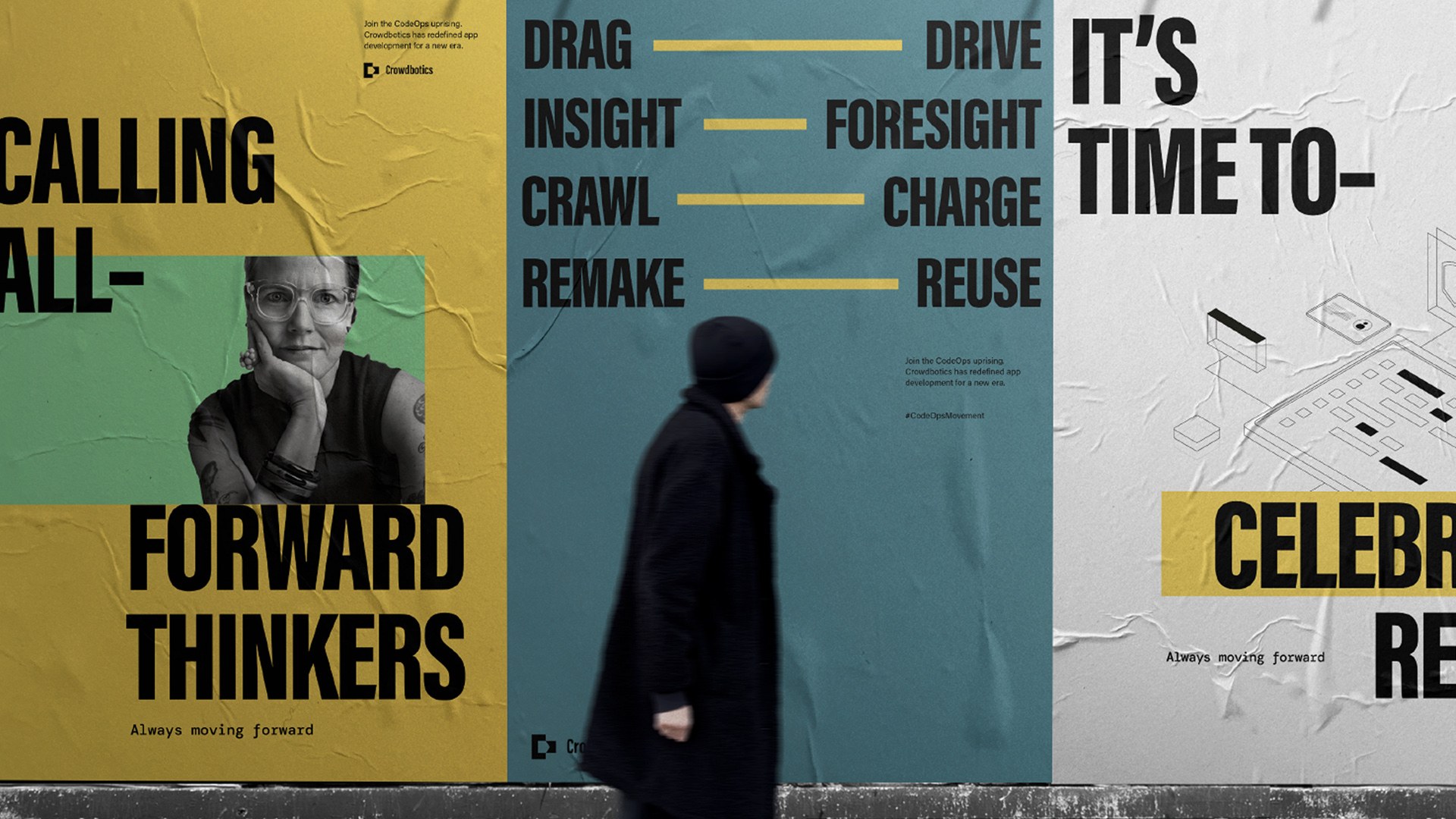
Crowdbotics builds apps through a non-agency model: a platform plus a service layer. That positioning made development look easy, so some prospects dismissed it as 'too simple,' even while it competed with low-end tools and high-end shops.
Role & timeline
- Role
- CX and creative direction lead
- Timeline
- Aug 2023 – Jan 2024
- Responsibilities
- Client communication, team leadership, journey mapping, creative direction, prototyping, and design
- Key skills
- Creative strategy, research, UX, service design, visual design
Problem
Weak competitive messaging made worse by a leaky funnel, poor navigation, and a taxonomy that worked against client outcomes.
Goal
Rebuild the digital experience so it reflects what the company actually does, and fix short-term performance along the way.
Results
Observed post-launch improvements
- Better form conversion
- 20%
- Increase in traffic
- 23%
- More crosslink activity
- 4.25x
- Average page time
- +0:36
Better form conversion
Increase in traffic
More crosslink activity
Average page time
01
Overview
Crowdbotics sells speed, low cost, and power. We sequenced the work by business impact: triage the data and user flow first, then a full redesign focused on conversion and positioning.
Opportunities
- Triage high-impact UX and performance issues
- Flexible taxonomy and design for scale
- A new site to boost conversion and clarify value
- Better sales and marketing data
02
Audit
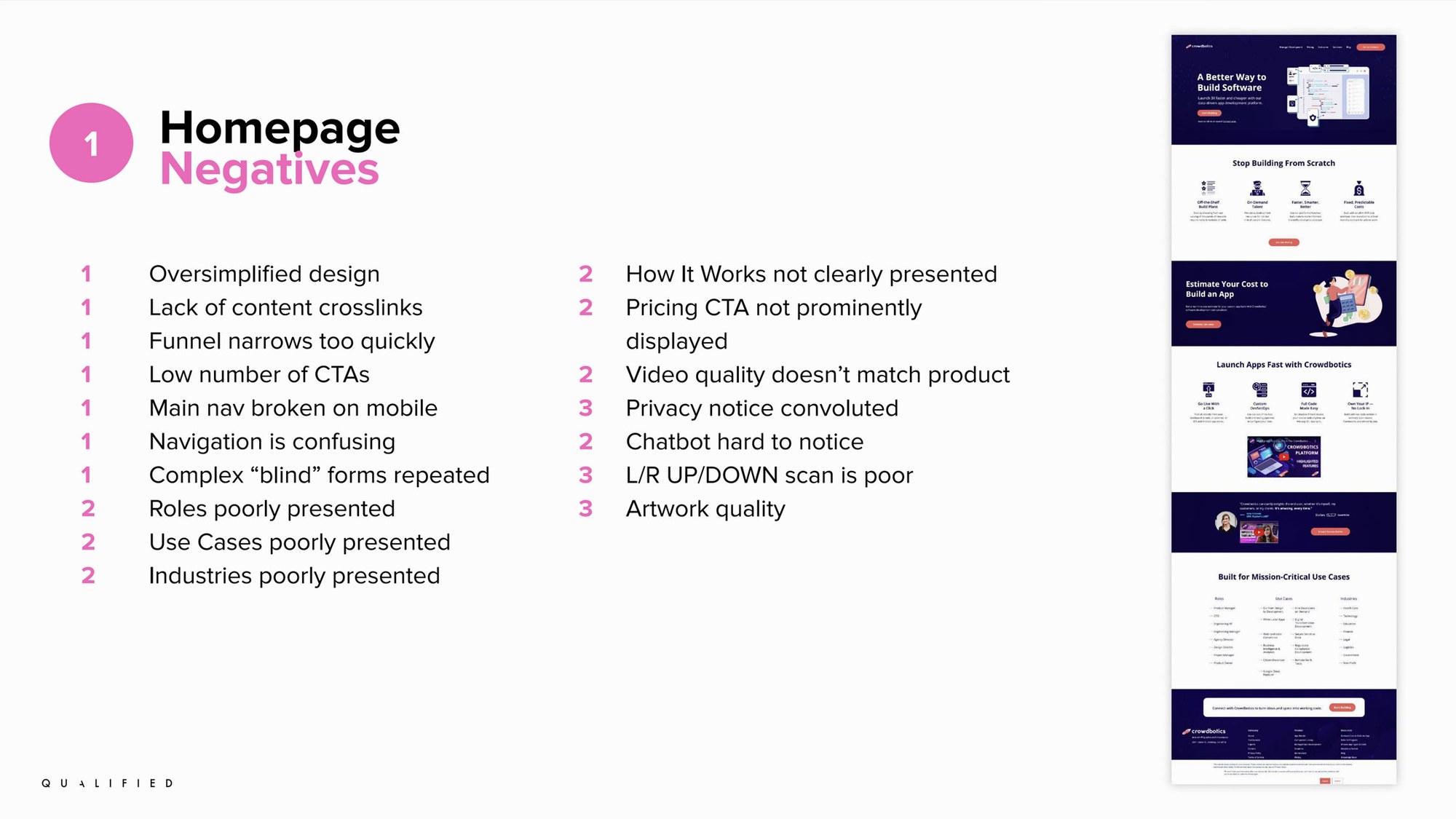
Analytics and CRM data showed weak engagement across the board. Customers found the brand simplistic and off-putting, and that impression carried over to the platform.
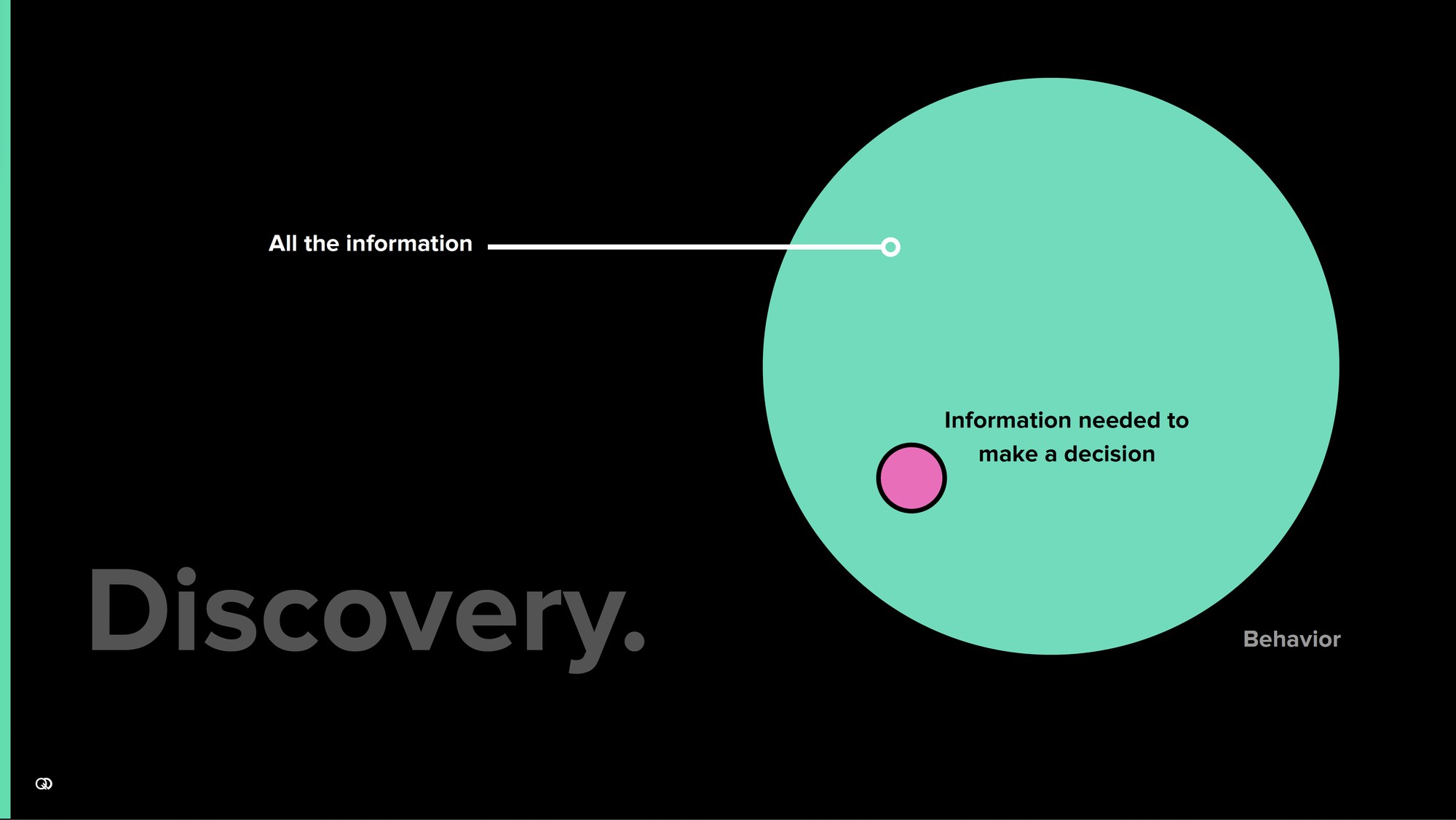
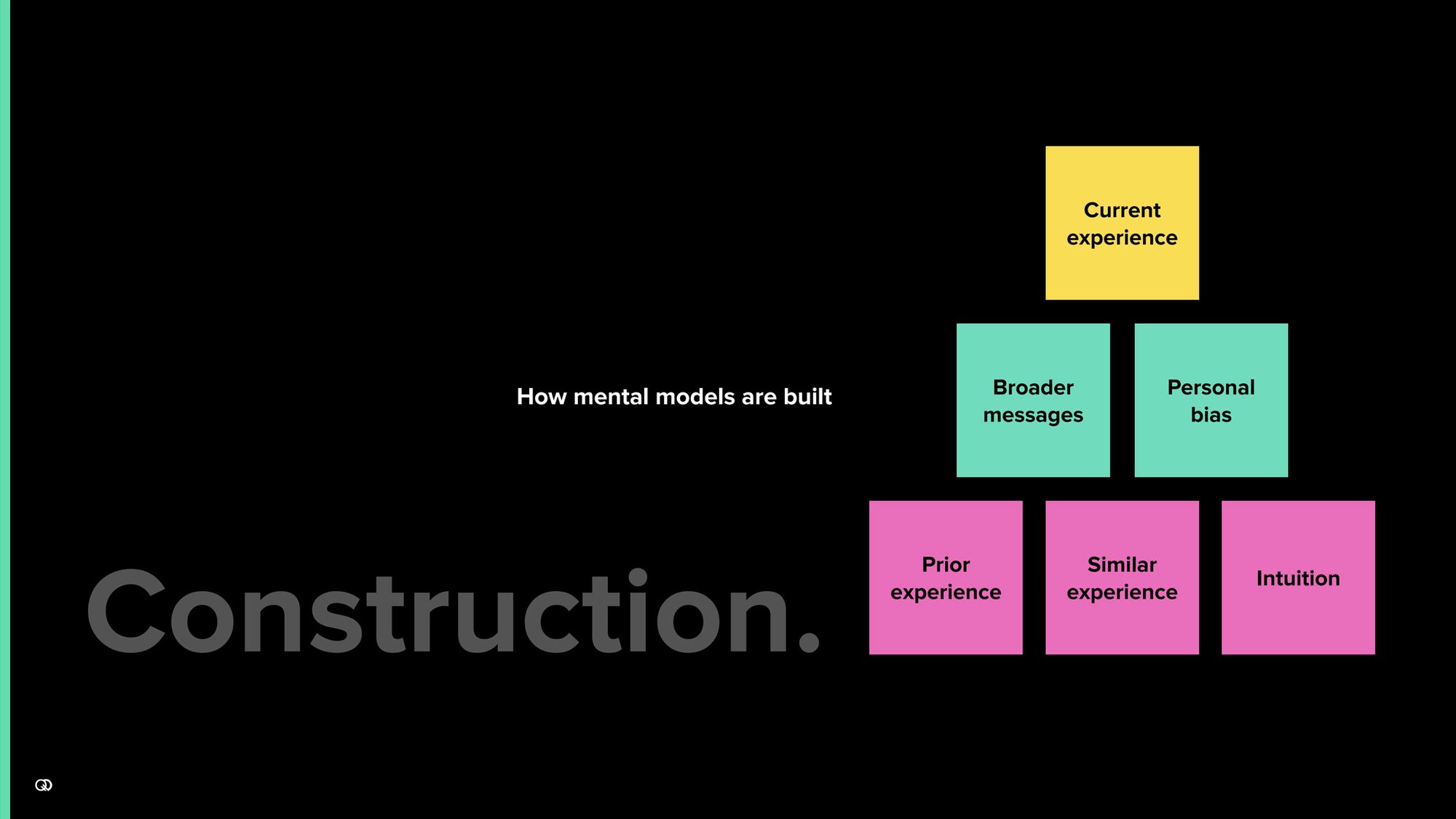
We audited the full experience, including the marketplace and CRM, scoring each area for impact and effort. We paired the findings with notes on how mental models form and where this experience broke them.
- Form conversion rate
- 0.5%
- On-page click rate
- 5.3%
- Blog search engagement
- 9.6%
- Homepage bounce rate
- 79%
Form conversion rate
On-page click rate
Blog search engagement
Homepage bounce rate
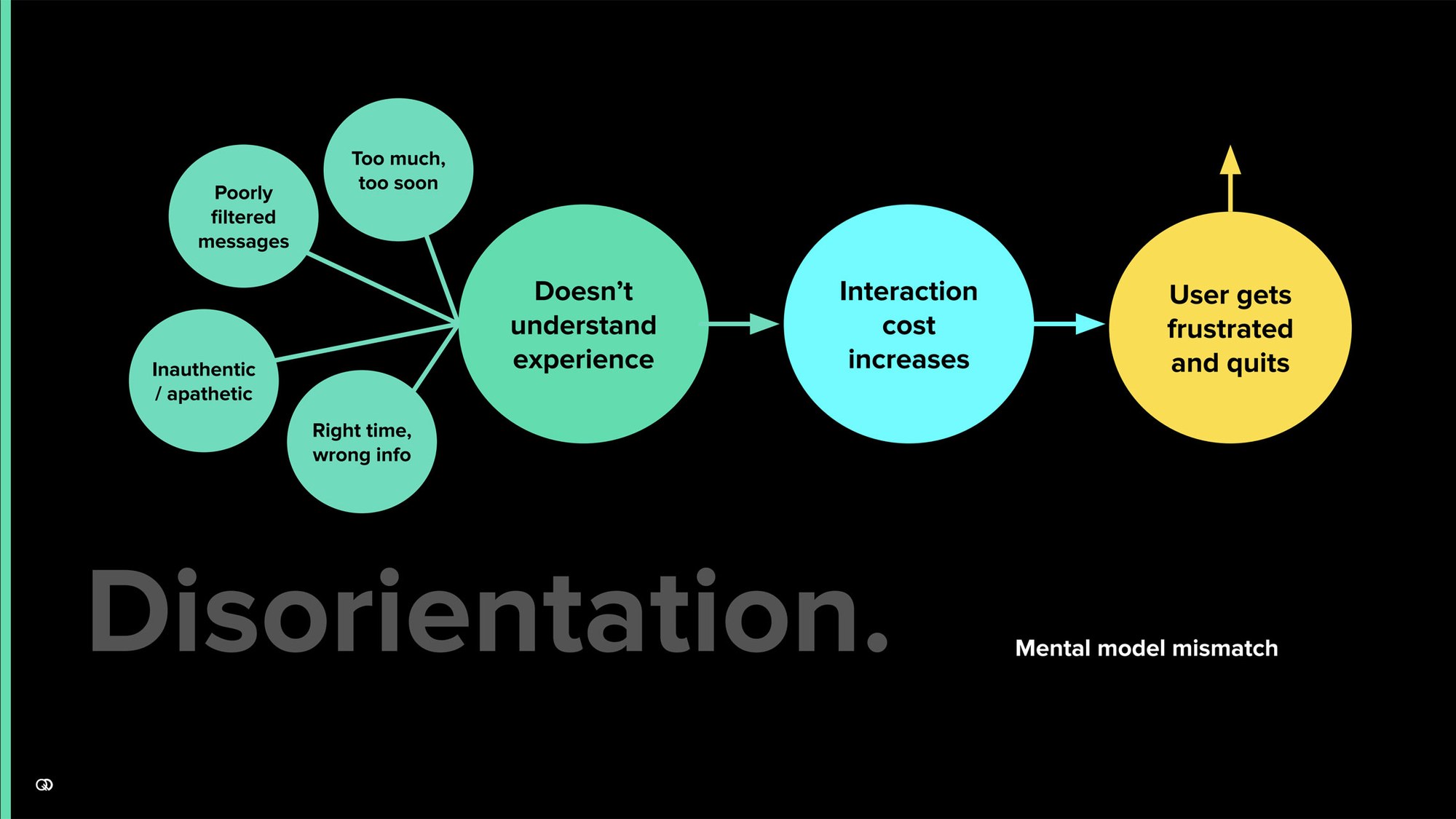
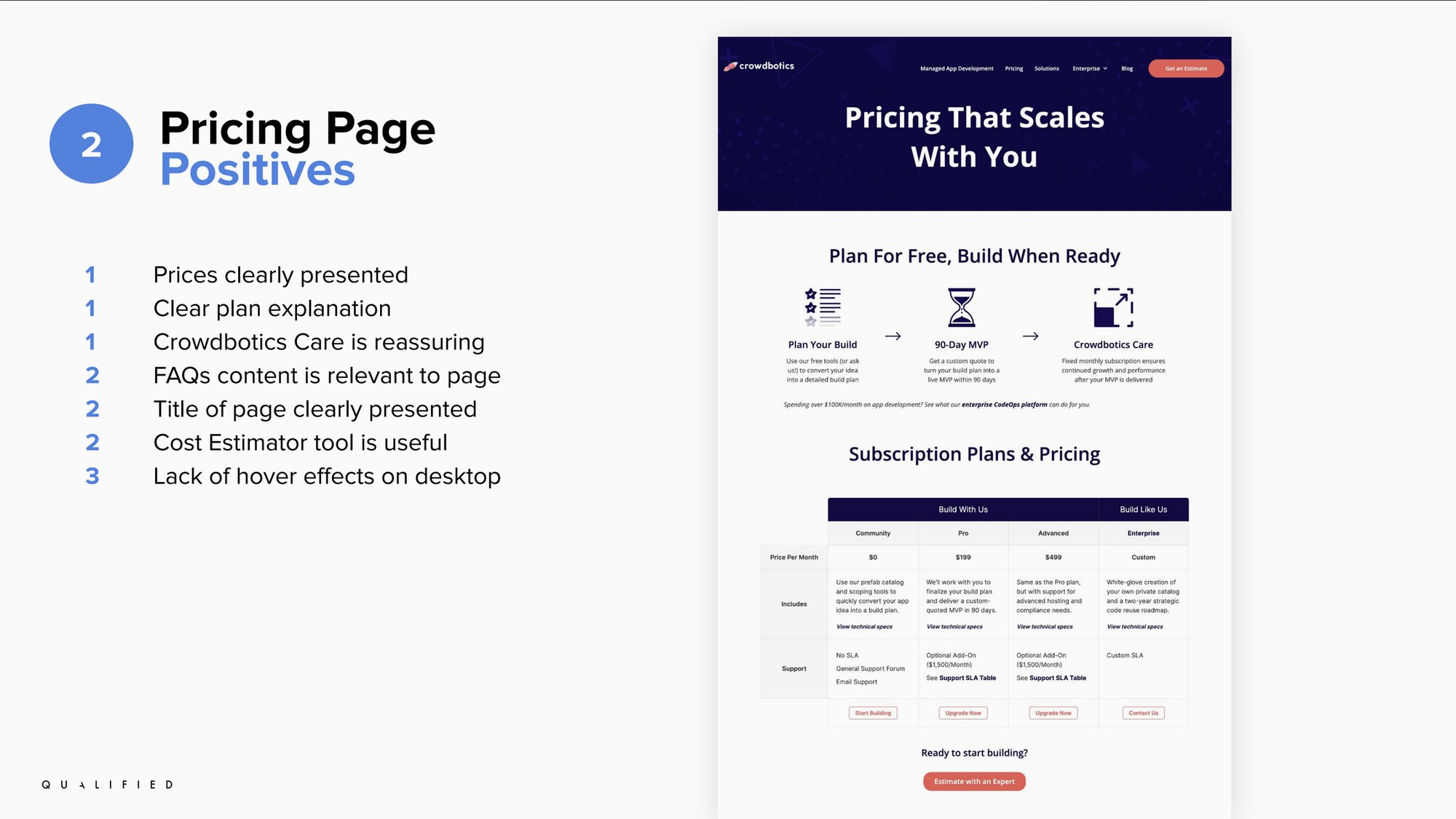
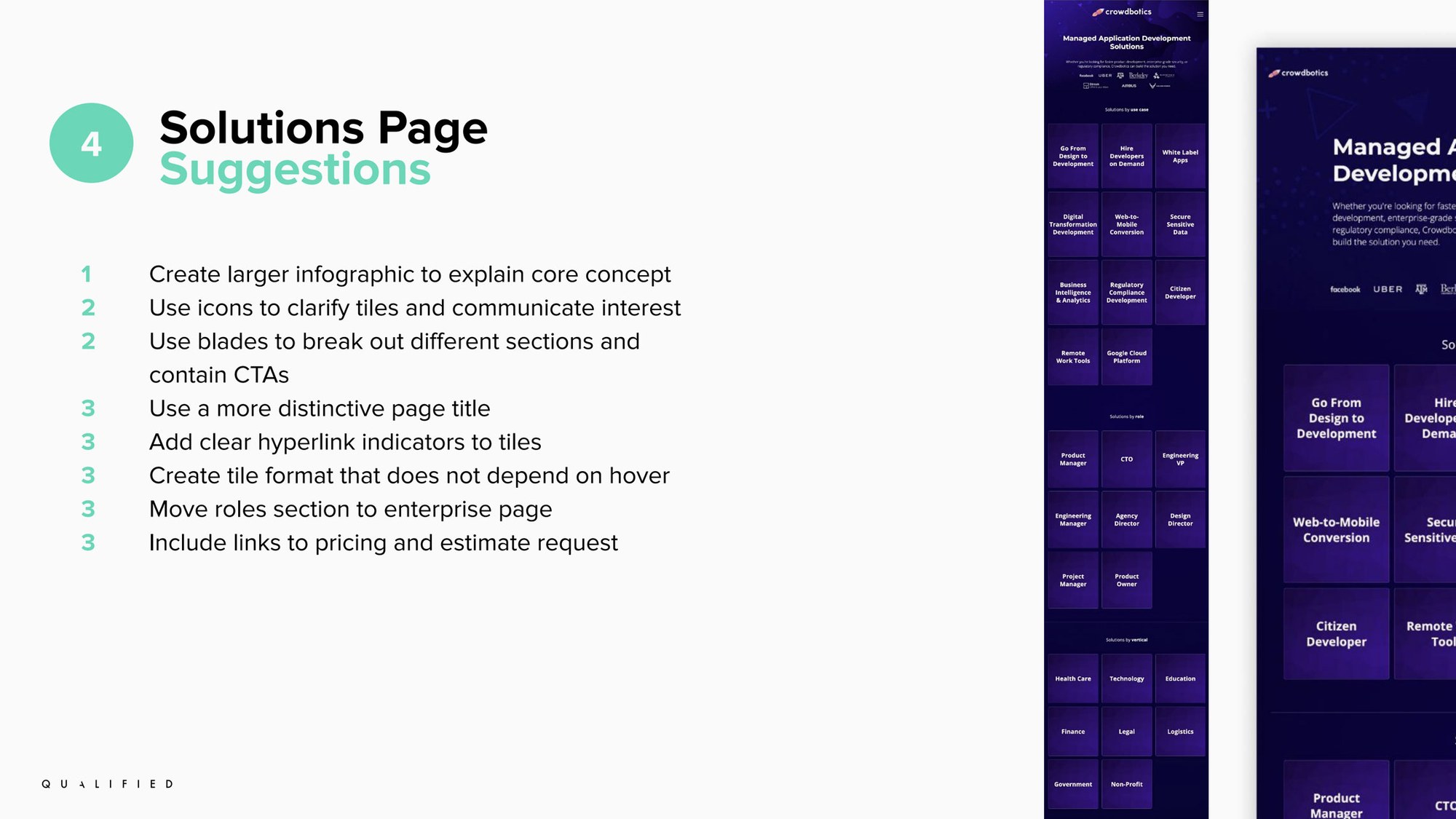
Three problems kept coming up: redundant navigation labels ('Technology', 'API', 'Platform'), unpolished design language, and content that never explained what the company actually did.
03
Design
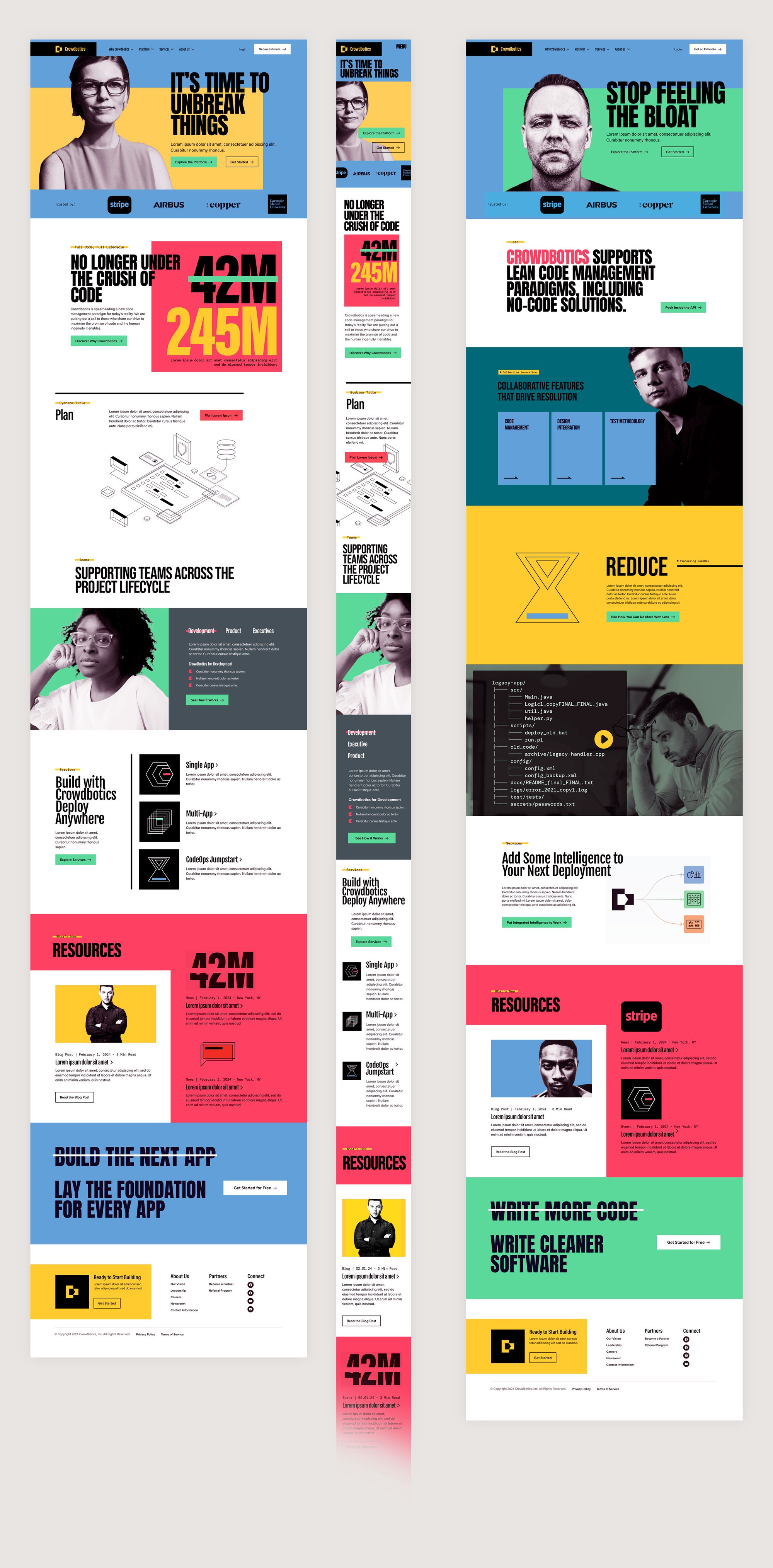
A brand overhaul had just updated Crowdbotics' visual and copy style. We carried that into the site by rebuilding navigation and taxonomy around persona journeys, then mapping conversion points to those categories so tracking matched real behavior.
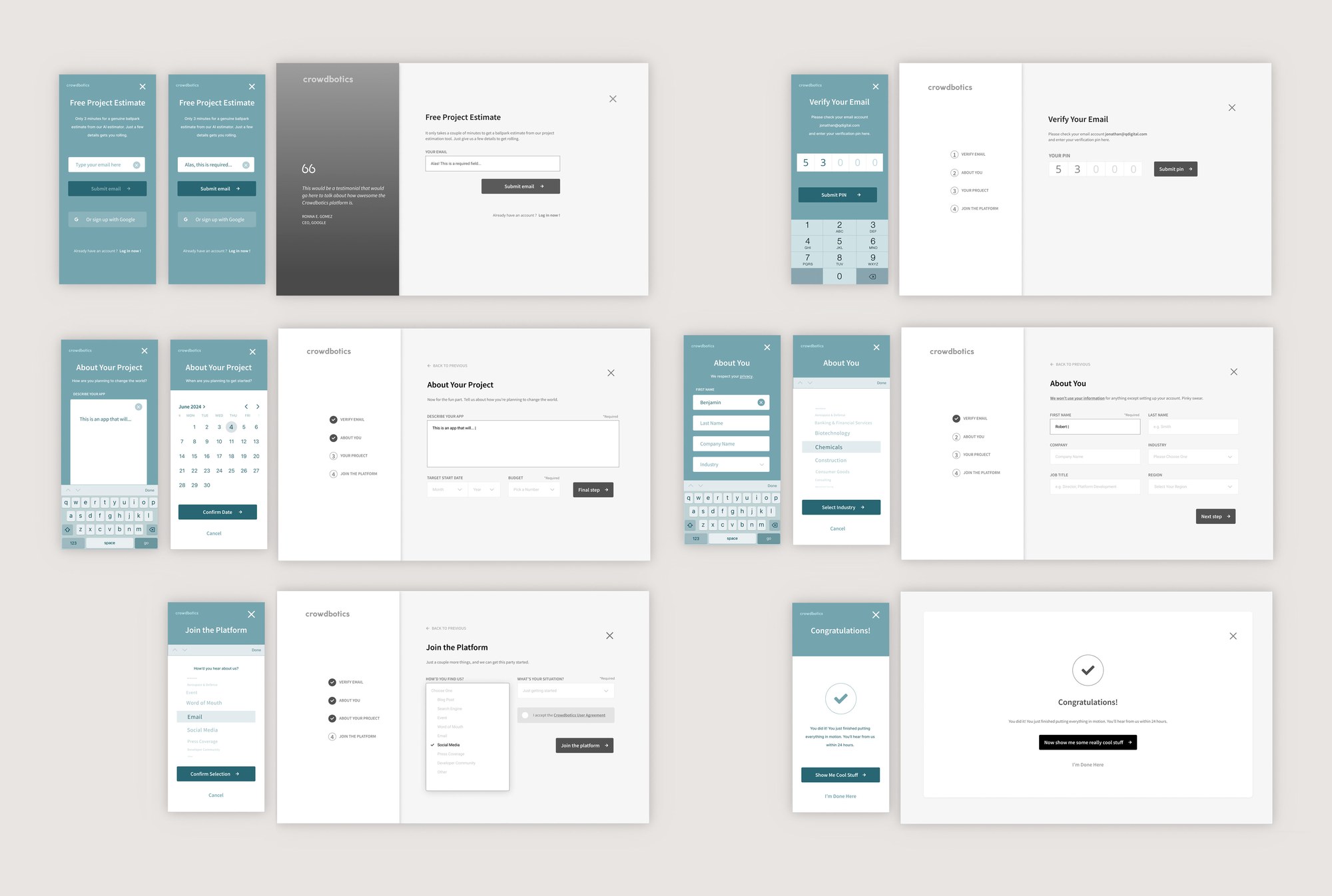
Structure came first. Low-fidelity wireframes mapped tasks across taxonomy levels to see where each persona lost the thread. We moved to high fidelity once the flows held up.
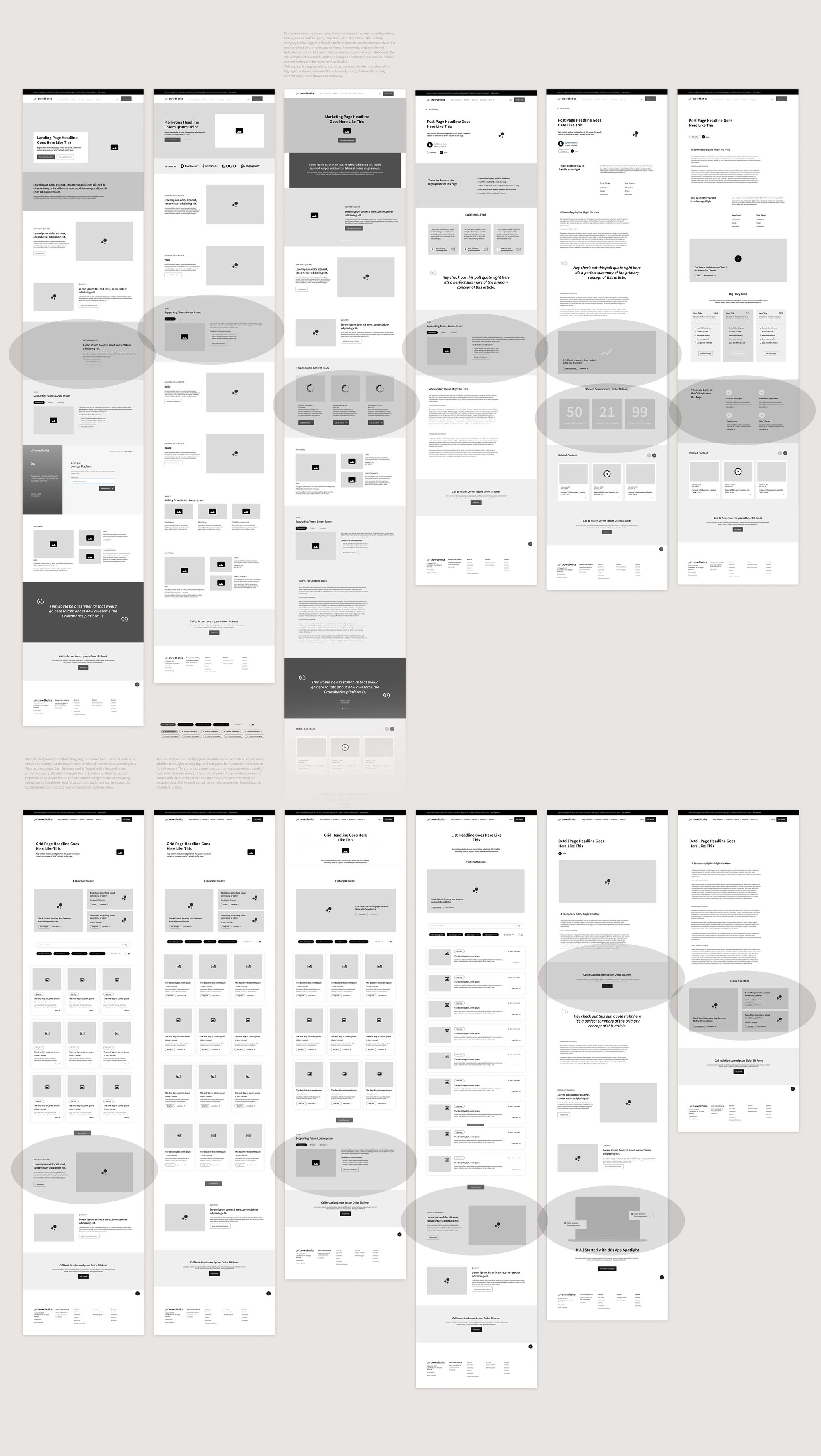
High-fidelity screens applied the brand style without changing the underlying structure. The final direction sat on a taxonomy that had already been tested.
04
Testing & findings
Automated and moderated testing showed gains in company impressions and form conversion. But 28% of users still left without understanding what Crowdbotics offered, a messaging problem beyond layout.
Findings
- Key flows still had failures
- In-house development capacity was limited
- Content depth fell short across the board
- Personas matched real behavior
- Industry pages interested users but showed low engagement
- 28% left unclear what the company does
The presentation and organization of information worked well enough that the client began to notice deeper taxonomy and UX issues across the domain.
05
Impact
Timeline constraints led to a simplified first build, with a fuller rollout planned later. We tracked persona-specific search terms through the funnel. Most KPIs improved, including traffic and conversion, because interim work carried into the final design.
Neither round moved the Naysayer persona, who visited to confirm a negative bias rather than to decide.
Successes
- Boosted traffic, engagement, and form submissions
- Simpler personas and clearer personalized journeys
- Improved navigation schema and content taxonomy
- Delivered a compelling, brand-authentic experience
Backlog
- Cohesive content strategy
- Deeper IA work as content allows
- Refined crosslinking and contextual CTAs
- AI-assisted content development
- Persona-specific form variants
Conversion paths were missing from related content areas, especially codeshare and marketplace. The biggest remaining needs were fresh top-of-funnel content and more page templates.